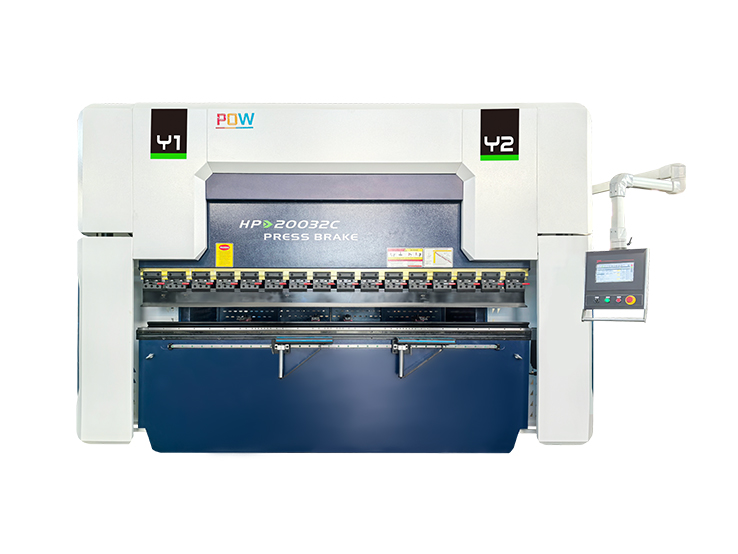
Choosing the right Press Brake begins with the work, not the machine’s advertised tonnage. A small fabrication shop may need a compact hydraulic model, while a production line may require a high-speed electric or hybrid system. The correct decision depends on material type, sheet thickness, bending length, angle accuracy, batch size, and available floor space. Measure twice.
In practical machine evaluations, operators often discover that maximum capacity is only part of the story. A Press Brake should handle your regular workload comfortably, without constant operation near its limits. Check the frame rigidity, ram accuracy, tooling compatibility, back gauge design, control system, and safety features. A reliable machine also needs accessible maintenance points and responsive technical support. These details can affect productivity more than a polished brochure suggests.
Budget deserves careful attention, but the lowest purchase price may create higher costs later. Consider energy use, tooling replacement, setup time, operator training, software integration, and expected service life. Ask suppliers for verifiable specifications, test results, references, and a clear warranty. If possible, run your own material through a demonstration machine. Watch the first bend, inspect the angle, and measure the finished flange.
There is no perfect choice. I have seen buyers focus heavily on tonnage and overlook tooling or operator comfort. That mistake is easy to repeat. A thoughtful comparison should include present needs and realistic future growth. When performance, safety, service, and total ownership cost align, your Press Brake becomes more than equipment. It becomes a dependable part of the production process.
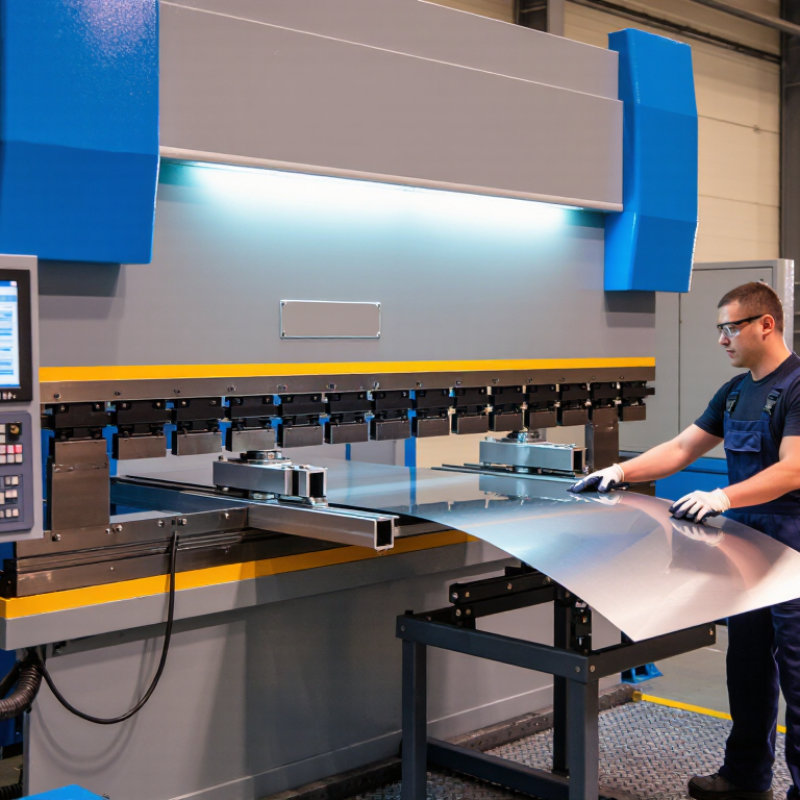
Start with the actual material, not a catalog assumption. Carbon steel, stainless steel, and aluminum behave differently under the same force. Stainless steel often needs more tonnage and shows stronger springback. Record the material grade, tensile strength, and grain direction before choosing a press brake. A 3 mm sheet may bend easily in one grade but resist noticeably in another. Material data matters.
Thickness and bend length determine the machine’s working demand. Measure the thickest sheet you expect to process, not only your current orders. A 3,000 mm bend length requires stable force across the full bed. Uneven loading can affect accuracy and tool life. I have seen users choose capacity too tightly, then struggle when thicker batches arrive. Extra capacity costs money, but insufficient capacity costs more.
The required V-opening controls bending force, inside radius, and possible marking. A common air-bending guideline uses a V-opening several times larger than sheet thickness, but material strength changes the result. A narrow opening creates higher force and sharper marks. A wider opening reduces force but may increase the inside radius. Test pieces are valuable here. My own early selections relied too much on general formulas. Actual trials exposed springback and surface damage that calculations missed. Check the tooling chart, allowable tonnage, and target radius before approval. Small details matter.
Press brake capacity depends mainly on material, thickness, bend length, and the selected V-opening. The chart shows estimated air-bending force for mild steel with a tensile strength of approximately 450 N/mm², a 1,000 mm bend length, and a V-opening of 8 times the material thickness.
Calculate the V-die opening first. The 8× thickness rule sets V at eight times the sheet thickness. For 3 mm mild steel, select a 24 mm V-die. A practical metric formula is:
T = 1.42 × Rm × L × t² ÷ V ÷ 9,806
Here, Rm is tensile strength in MPa, L is bend length in millimetres, and T is metric tonnes. With 450 MPa steel and a 1,000 mm bend, the estimate reaches about 24.4 tonnes. That is only an estimate.
Material data matters. ASTM A36/A36M specifies a minimum 36 ksi yield strength, but actual mill certificates can show different tensile values. ISO 6892-1:2019 provides the tensile-testing method used to verify these properties. The World Steel Association reported approximately 1.9 billion tonnes of crude steel production in 2023, yet “mild steel” still covers many grades. Do not trust a generic chart blindly.
Check the whole job, not one bend. Longer flanges increase force. Stainless steel usually needs higher capacity. A narrow V-die can mark the surface or overload the shoulders. I normally keep 15–25% reserve capacity, although that habit is not a universal rule. Tool condition also changes results. Real shop trials sometimes disagree with calculations. That is frustrating, but useful. Confirm the force with the material certificate, bend length, tooling limits, and the machine’s rated capacity before purchase.
How to Choose the Right Press Brake for Your Needs?
Press brake capacity should match force per metre, not only total tonnage. A 30-ton machine may handle short bends, while a 1,000-ton system suits thick plate and long forming lines. Calculate the required force using material strength, thickness, bend length, and die opening. For example, a 6 mm mild-steel plate may require roughly 45–60 tons per metre. Stainless steel can require about 1.5 times more force. These figures are practical estimates, not guarantees.
According to the World Steel Association’s World Steel in Figures 2024, global crude steel production reached about 1.89 billion tonnes in 2023. Its October 2024 Short Range Outlook also forecast continued steel demand growth. This supports careful capacity planning across fabrication sectors. Still, choosing a larger machine is not always wiser. Excess capacity raises purchase, energy, tooling, and floor-space costs. I have seen rough tonnage estimates fail when operators ignored bend length or die width. That mistake is expensive.
Tips: Start with your thickest common material, not your occasional maximum. Check the machine’s rated force per metre. Confirm whether the rating applies across the full bed length. Leave a sensible margin for material variation and future work. Record real bending results from your shop. A calculation can be correct and still feel wrong in production.
Choosing the right press brake starts with the work, not the machine’s axis count.
A two-axis CNC system can handle straightforward bends with consistent flange lengths. Four or five axes add control over backgauge height, depth, and angle. Machines with six to eight axes suit complex parts, tapered profiles, and frequent setup changes.
Accuracy depends on more than the advertised tolerance.
Material thickness, springback, tooling wear, and operator technique all affect the final bend. A practical test is simple: bend your common steel or aluminum samples, then measure several parts with a calibrated angle gauge. Watch the first and last pieces. They may not match perfectly.
Speed also needs careful interpretation.
Faster ram movement can reduce cycle time, but slow loading or repeated corrections may erase that advantage. Backgauging is often the real productivity factor. A stable, programmable backgauge can position narrow flanges accurately and reduce manual marking. I have seen a slower machine outperform a faster one because its setup process was clearer. Still, more axes can increase programming effort and maintenance. That trade-off is easy to underestimate. Choose the configuration your operators can use confidently every day.
How to Choose the Right Press Brake for Your Needs?
Tooling should match the parts you actually produce, not the parts you might make someday. Check material thickness, bend length, inside radius, and required angles. A narrow die can mark soft sheet, while an oversized opening may reduce control. I once selected tooling for maximum capacity and created unnecessary setup work. That mistake was expensive. Confirm punch height, die width, and tonnage with documented calculations. Ask experienced operators to test difficult profiles before purchasing.
Safety systems deserve the same attention as bending performance. Look for reliable guarding, light curtains, emergency stops, and clear control access. These features must suit the operator’s workflow and be maintained regularly. A qualified safety professional should review the installation against applicable local requirements. Do not treat safety as an optional accessory. It affects training, uptime, and confidence around the machine.
Energy use depends heavily on production volume and duty cycles. A high-volume shop may benefit from efficient drive systems, standby modes, and automatic shutdown settings. For occasional fabrication, a simpler machine may provide better value and easier maintenance. Compare measured power consumption, not only sales estimates. Review service records, noise levels, warm-up time, and control response. The cheapest machine can become costly when every setup feels slow. Measure your real daily workload for several weeks before deciding.
| Machine Profile | Typical Capacity | Best-Matched Tooling | Recommended Safety Systems | Typical Energy Use | Suitable Production Volume | Ideal Applications |
|---|---|---|---|---|---|---|
| Compact Electric Press Brake |
300–1,000 mm working length 10–40 tonnes nominal force |
Precision-ground punch and die sets; narrow V-dies for thin sheet; quick-change tooling for frequent setup changes |
Recommended Laser-based or optoelectronic guarding, two-hand controls, emergency stops, and programmable backgauge |
Approximately 3–10 kW connected load, depending on axis configuration and duty cycle |
Low to medium volume; prototypes, repair work, and short batches |
Stainless steel, aluminum, mild-steel brackets, enclosures, and small formed parts |
| Small Hydraulic Press Brake |
1,250–2,000 mm working length 40–100 tonnes nominal force |
Segmented or full-length precision tooling; V-dies selected according to material thickness and bend radius; clamping suitable for moderate changeover frequency |
Recommended Light curtains or laser protection, side and rear guards, emergency stop circuit, and overload protection |
Approximately 5–15 kW motor rating; actual consumption varies with idle time and hydraulic duty cycle |
Low to medium volume; general fabrication and job-shop work |
Cabinets, machine frames, support plates, channels, and general sheet-metal components |
| Mid-Range Hydraulic Press Brake |
2,000–3,100 mm working length 100–250 tonnes nominal force |
Standardized upper and lower tooling systems; crowning-compatible dies for long bends; segmented tooling for mixed part sizes |
Recommended Laser or light-curtain guarding, monitored foot pedal, multi-axis backgauge, and programmable safety zones |
Approximately 11–30 kW motor rating; hydraulic power demand increases during repeated forming cycles |
Medium to high volume; repeated batches with several material grades |
Industrial panels, structural components, agricultural equipment, and medium-size assemblies |
| Large Hydraulic Press Brake |
3,100–6,000 mm working length 250–1,000 tonnes nominal force |
Heavy-duty tooling with suitable load ratings; large-radius dies for thick plate; optional tandem or special-purpose tooling for oversized parts |
Recommended Full perimeter guarding, light curtains or laser systems, rear safety fencing, dual-pedal controls, and die-area access monitoring |
Approximately 22–75 kW or higher motor rating; energy use depends strongly on plate thickness, stroke rate, and cycle frequency |
Medium volume; large-part fabrication and project-based production |
Heavy equipment, transport structures, construction components, large frames, and thick plate work |
| Servo-Electric Production Press Brake |
1,500–3,100 mm working length 50–220 tonnes nominal force |
High-repeatability precision tooling; automatic or hydraulic clamping; segmented tools for quick changeovers and mixed part families |
Recommended Laser-based guarding, programmable safety zones, two-hand or monitored foot controls, and collision-prevention software |
Often 30–70% lower operating energy than comparable continuously running hydraulic systems, depending on workload and machine design |
Medium to very high volume; frequent cycles, short takt times, and repeat production |
Electronics cabinets, HVAC panels, lighting equipment, appliances, and precision components |
| Hybrid Press Brake |
2,000–4,000 mm working length 100–400 tonnes nominal force |
Precision tooling with hydraulic or automatic clamping; crowning for long bends; tool packages matched to repeat production |
Recommended Laser or light-curtain protection, rear guarding, programmable backgauge limits, and integrated emergency circuits |
Typically lower idle energy than conventional hydraulic designs; actual savings depend on duty cycle, pump control, and operating settings |
Medium to high volume; flexible production requiring both speed and high forming force |
Contract manufacturing, industrial enclosures, vehicle parts, and mixed-gauge sheet-metal production |
| High-Speed Automated Cell |
2,000–4,000 mm working length 80–300 tonnes nominal force |
Quick-change precision tooling; standardized tool heights; robot-compatible dies and fixtures |
Requires Integration Interlocked perimeter fencing, safety scanners, light curtains, robot safety-rated controls, and validated cell access procedures |
Machine and robot energy must be evaluated together; efficient operation depends on balanced cycle times and minimized idle periods |
High to very high volume; stable part families and repeatable loading conditions |
Automotive subassemblies, standardized cabinets, appliance parts, and repetitive multi-bend components |
Selection note: Rated force and energy figures are indicative engineering ranges, not universal specifications. Confirm the required tonnage using material type, thickness, bend length, die opening, inside bend radius, and tooling load limits. Safety equipment should be selected and validated according to the applicable local machinery-safety regulations and the machine’s risk assessment.