Inquiry
Form loading...

7 Tips for Choosing the Best CNC Milling Center for Your Business

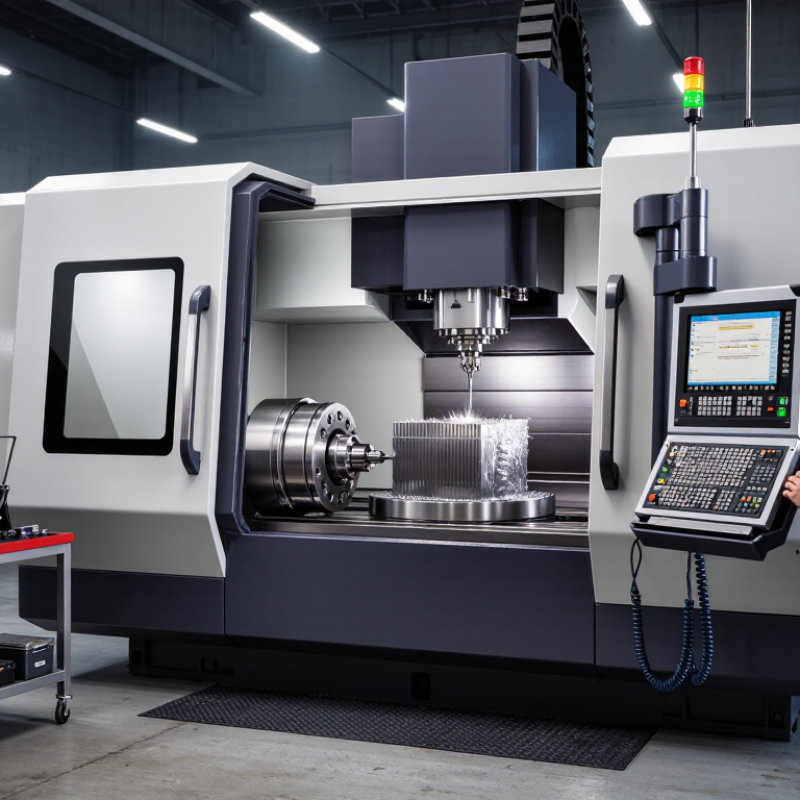
Choosing the right Cnc Milling Center can shape your production quality, delivery speed, and long-term operating costs. It is not merely a matter of comparing spindle power or purchase prices. The best decision connects machine capability with your materials, tolerances, workload, operators, and future orders.

In practice, a workshop may need to cut aluminum all day, then machine hardened steel with tight dimensional requirements. Those jobs demand different spindle speeds, rigidity, tooling systems, coolant control, and thermal stability. Review real cycle-time data, sample parts, maintenance records, and service response times. A machine that looks impressive in a showroom may perform differently beside your production line. Small details matter.

These seven tips provide a practical framework for evaluating suppliers and equipment. They cover work envelope, accuracy, automation, software compatibility, energy use, training, and after-sales support. Speak with current users, request a test cut, and inspect the finished surface under realistic conditions. A polished brochure can still mislead. I have seen buyers focus on a low initial price, then struggle with downtime, unavailable parts, or difficult programming. That mistake is expensive.

Reliable selection also requires honest self-assessment. Do you need five-axis flexibility, or would a dependable three-axis model meet current demand? Are your operators prepared for advanced controls? Will the supplier document accuracy claims clearly? No machine is perfect, and every Cnc Milling Center involves trade-offs. Careful comparison, verified evidence, and experienced technical advice can reduce those risks and support a more confident investment.
7 Tips for Choosing the Best CNC Milling Center for Your Business

Define Your Production Needs and Part Requirements

Before choosing a CNC milling center, define what your shop actually needs to make. List the part materials, dimensions, tolerances, and expected monthly quantities. A small aluminum housing may need a different setup from a large steel fixture. Include the biggest part, not just the one you make most often. Measure twice.

Then review the operations each part requires. Count faces to machine, holes to drill, pockets to cut, and setups needed to reach them. If parts require frequent repositioning, a suitable rotary axis or larger work envelope could reduce handling time. Check tool length and clearance, too. A part may fit on the table but still collide with the spindle head during machining.

Production forecasts deserve a reality check. Separate confirmed orders from optimistic estimates, and note seasonal peaks or likely design changes. I have seen capacity plans built around one busy month; the machine later sat underused. That matters. Record target cycle times and acceptable setup time, but leave room for inspection, tool changes, and operator skill. Compare these requirements with your existing fixtures, available floor space, and power supply. If those details are vague, pause and gather measurements before requesting machine specifications. A precise needs list helps suppliers answer practical questions instead of offering a machine that is capable on paper but poorly matched to your daily work.
Compare Machine Size, Axes, Speed, and Precision

Choosing the right CNC milling center starts with the part envelope. Measure your largest workpiece, fixture, tool clearance, and chip evacuation space. A machine table that barely fits today’s job may restrict tomorrow’s contracts. Leave practical room around the spindle and doors. Bigger is not always better.

Axes determine movement, access, and setup time. Three-axis equipment suits many prismatic parts, while four- or five-axis machining can reduce repositioning and fixture errors. However, extra axes increase programming demands and inspection requirements. Review your actual part mix, not an idealized brochure. That distinction matters.

Speed needs context. Spindle rpm affects small-tool cutting, but torque matters more for larger cutters and tough materials. Feed rate, acceleration, and rapid positioning also influence cycle time. The 2024 Deloitte Smart Manufacturing Survey reported that 86% of manufacturers expect smart manufacturing to become a key competitiveness driver within five years. That supports measuring data, not guessing from headline specifications. Precision should include positioning accuracy, repeatability, thermal stability, and volumetric performance. ISO 230-2 provides a recognized method for testing positioning accuracy and repeatability. Ask for test conditions, temperature, and measurement equipment. Numbers without conditions can mislead. I have seen impressive accuracy claims fail during long, warm production runs. A smaller, rigid machine may outperform a larger model with poor thermal control. Compare verified test results, sample parts, service response, and total cycle time before deciding.

7 Tips for Choosing the Best CNC Milling Center for Your Business — Compare Machine Size, Axes, Speed, and Precision
Selection Criterion Compact 3-Axis Center Production 3-Axis Center 4-Axis Horizontal Center 5-Axis Simultaneous Center
1. Match the Work Envelope to the Largest Part Typical travels: X 500–700 mm, Y 350–450 mm, Z 400–500 mm.
Suitable for small components, prototypes, fixtures, and limited floor space.
Typical travels: X 800–1,100 mm, Y 450–650 mm, Z 500–650 mm.
Suitable for medium-sized production parts and general machining.
Typical travels: X 600–900 mm, Y 600–800 mm, Z 600–800 mm.
A horizontal layout can improve chip evacuation and multi-face access.
Typical travels: X 600–1,000 mm, Y 500–800 mm, Z 500–800 mm.
The rotary table or trunnion may reduce usable workholding space.
2. Check Table Size and Load Capacity Typical table size: 600 × 350 to 800 × 450 mm.
Typical load capacity: 250–500 kg.
Typical table size: 900 × 450 to 1,300 × 600 mm.
Typical load capacity: 600–1,500 kg.
Typical pallet or table size: 500 × 500 to 800 × 800 mm.
Typical load capacity: 500–2,000 kg, depending on configuration.
Typical table or trunnion diameter: 400–800 mm.
Typical load capacity: 300–1,000 kg; verify load limits at tilted angles.
3. Select the Right Number of Axes 3 linear axes: X, Y, and Z.
Best for prismatic parts machined from one or two primary directions.
3 linear axes: X, Y, and Z.
A good choice when fixtures can provide repeatable part positioning.
4 axes: X, Y, Z, plus a rotary axis.
Reduces re-fixturing for parts requiring machining around multiple faces.
5 axes: X, Y, Z, plus two rotary axes.
Recommended for complex surfaces, impellers, molds, and multi-sided parts.
4. Compare Spindle Speed and Cutting Capability Common spindle range: 8,000–12,000 rpm.
Typical spindle power: 7.5–15 kW; suitable for aluminum, plastics, and light steel work.
Common spindle range: 8,000–15,000 rpm.
Typical spindle power: 15–30 kW; balances material removal and general-purpose work.
Common spindle range: 6,000–12,000 rpm.
Typical spindle power: 15–30 kW; horizontal cutting supports heavy chip removal.
Common spindle range: 12,000–24,000 rpm.
Typical spindle power: 15–30 kW; high speed supports small tools and complex contours.
5. Evaluate Precision and Repeatability Typical positioning accuracy: approximately ±0.010–0.020 mm.
Typical repeatability: approximately ±0.005–0.010 mm.
Typical positioning accuracy: approximately ±0.008–0.015 mm.
Typical repeatability: approximately ±0.003–0.008 mm.
Typical positioning accuracy: approximately ±0.008–0.015 mm.
Rotary-axis accuracy depends heavily on calibration and thermal control.
Typical linear positioning accuracy: approximately ±0.005–0.012 mm.
Finished part accuracy also depends on rotary-axis calibration, fixturing, and tool length.
6. Review Speed, Automation, and Throughput Typical rapid traverse: 20–36 m/min.
Tool capacity: 16–24 tools; suitable for low-to-medium batch sizes.
Typical rapid traverse: 30–48 m/min.
Tool capacity: 24–60 tools; optional pallet changers can support higher utilization.
Typical rapid traverse: 30–60 m/min.
Pallet changers and multiple fixtures can reduce loading and setup time.
Typical rapid traverse: 24–48 m/min.
Advanced probing, tool measurement, and collision monitoring are valuable for complex work.
7. Consider Total Cost and Business Fit Lower purchase, installation, and energy costs.
Best fit: prototypes, job shops, education, and small parts.
Moderate investment with broad material and part-size capability.
Best fit: repeat production and general subcontract machining.
Higher investment, but fewer setups can reduce labor and alignment time.
Best fit: multi-face parts and medium-to-large batches.
Highest investment and programming requirements, but fewer fixtures and setups.
Best fit: complex geometry, high-value parts, and premium accuracy work.

Note: The figures shown are typical industry ranges for new vertical or horizontal machining centers. Actual performance varies with machine construction, control system, tooling, workholding, material, thermal conditions, maintenance, and measurement methods. Confirm published specifications and run a sample-part test before purchasing.

Assess Tooling, Controls, and Automation Options

A CNC milling center should match your work, not merely your budget. Tooling is the first practical test. Check spindle taper, tool diameter limits, and available tool positions. A small cabinet may look efficient, but frequent tool changes can interrupt production. Inspect how quickly operators can replace holders, probes, and damaged cutters. Measure twice.

Choose controls that operators can understand during a busy shift. Clear tool-offset screens reduce setup errors. Simulation functions can reveal collisions before metal reaches the spindle. Look for reliable data transfer, permission controls, and simple program backup procedures. Complex controls may offer impressive features, yet unused functions still increase training time. Noise matters.

Automation deserves a realistic assessment. A pallet changer may improve consistency when several jobs repeat daily. It may be wasteful for short batches with constant fixture changes. Robotic loading also requires safe access, stable part presentation, and careful maintenance planning. Ask suppliers to demonstrate your actual part family, not a perfect sample. That assumption can fail. Record cycle time, setup time, tool life, and operator intervention during the trial. These figures provide stronger evidence than a polished brochure. Leave room for manual recovery, because real production rarely follows the schedule exactly.

7 Tips for Choosing the Best CNC Milling Center for Your Business

Use a structured evaluation when comparing CNC milling centers. The suggested weighting below emphasizes tooling flexibility, control capability, automation readiness, and the machine specifications that directly affect productivity and operating cost.

Tooling, controls, and automation should receive the greatest attention because they influence setup time, repeatability, operator workload, and the ability to scale production. Confirm the final scores against your materials, part sizes, tolerances, batch volumes, and available workforce.

Evaluate Supplier Support, Training, and Maintenance

Choosing a CNC milling center is also a decision about long-term support. Ask the supplier for response-time targets, local technician coverage, and a written escalation process. A polished demonstration can mislead. Request service records from comparable installations, not generic promises. Check whether technicians understand spindle alignment, probing systems, control software, and coolant management. These details affect accuracy, uptime, and operator confidence.

Training deserves the same scrutiny as machine specifications. The Deloitte and Manufacturing Institute 2024 study projects 3.8 million new manufacturing jobs in the United States by 2033, with 1.9 million potentially unfilled. Suppliers should provide structured operator training, programming practice, safety instruction, and refresher sessions. Ask whether training uses your actual parts and tooling.

Maintenance support should include preventive schedules, spare-parts availability, remote diagnostics, and clear service pricing. McKinsey research reports that predictive maintenance can reduce machine downtime by 30% to 50% and lower maintenance costs by 10% to 40%. However, these gains depend on disciplined data collection and trained staff.

I would test the supplier’s response with a difficult question before signing. Their answer may reveal more than the brochure. Do not ignore small gaps. They often become expensive delays.

Calculate Total Ownership Costs and Verify Performance

A CNC milling center can look affordable until daily operating costs appear. Calculate the total ownership cost before comparing purchase prices. Include installation, shipping, electrical upgrades, tooling, software, training, maintenance, energy, and coolant disposal. Add expected downtime and financing charges. These costs often change the decision.

Tip: Build a five-year cost sheet.

Use your real production data, not optimistic estimates. Record average spindle hours, tool consumption, labor time, and rejected parts. A machine that saves ten minutes per component may justify a higher price. However, a fast machine with frequent service interruptions may create hidden losses. I have seen estimates fail because they ignored setup changes and operator training.

Tip: Verify performance with your material.

Ask for a test cut using a similar alloy and workpiece size. Measure cycle time, dimensional accuracy, repeatability, surface finish, and tool wear. Request inspection records from calibrated equipment. Check spindle load during heavy cuts, not only during a light demonstration. Confirm the machine can hold tolerance after several hours of operation. One short test can mislead you. We once underestimated fixture changes, and the quoted cycle time looked better than production reality.

Tip: Put acceptance criteria in writing.

Define measurable limits for accuracy, finish, vibration, service response, and training. Allow time for an independent inspection when possible. Performance claims should become documented evidence, not casual promises.