Inquiry
Form loading...

How to Choose a CNC Horizontal Lathe?

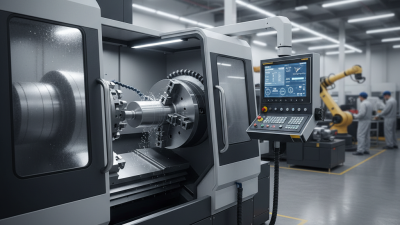
Choosing a Cnc Horizontal Lathe is a production decision, not merely a catalog comparison. The right machine must match your materials, part dimensions, tolerances, batch sizes, and operator skills. A compact lathe may suit short aluminum parts, while a rigid, high-torque model may handle steel shafts throughout long shifts. Look closely at spindle power, chuck size, swing diameter, turning length, axis travel, and rapid-feed rates. These details affect real output on the shop floor.

Gene Haas, founder of Haas Automation, has said, “The best machine tool is the one that makes your shop more productive.” That principle keeps the decision practical. A machine with impressive specifications may still disappoint if its control is difficult, tooling is expensive, or service support is slow. Ask how quickly technicians can reach your facility. Check spare-part availability. Request a test cut using your own material and drawing. Seeing chips, surface finish, cycle time, and dimensional stability reveals more than a brochure.

Do not ignore the operator’s daily experience. A clear control screen, accessible work area, and reliable chip management can save hours each week. Energy consumption matters too, especially in continuous production. My own assessment would not begin with price alone. It would begin with the part, the process, and the cost of failure. Some recommendations may remain imperfect because every workshop has different priorities. That uncertainty deserves honest testing. A suitable Cnc Horizontal Lathe should deliver repeatable accuracy, safe operation, maintainable performance, and measurable value over years of production.

How to Choose a CNC Horizontal Lathe?

Define the Workpiece and Production Requirements

How to Choose a CNC Horizontal Lathe?

Define the Workpiece and Production Requirements

Start with the part, not the machine catalog. Record the workpiece material, maximum diameter, overall length, and finished weight. A 45-millimeter steel shaft may need different capacity than an aluminum housing of the same size. Include drawings, tolerances, surface-finish targets, and thread details. Small omissions become expensive later.

Measure the real cutting conditions. Hard alloys demand stable power, rigid tooling, and controlled heat. Long shafts may require a tailstock or steady rest to reduce deflection. Check the spindle bore against the largest bar or pre-cut blank. Also consider chuck size, tool positions, coolant delivery, and chip removal. These details affect both accuracy and operator safety.

Production volume changes the decision. For occasional batches, flexible setup and simple programming may matter most. For thousands of identical parts, cycle time, automatic loading, tool monitoring, and repeatability deserve closer attention. I have seen teams choose high speed while ignoring setup minutes. That was costly. A neat spreadsheet can still mislead. Ask an experienced machinist to review the process, including tool changes and inspection points. Run a sample cycle when possible. Listen for vibration, watch chip formation, and measure the first parts after thermal stabilization. The best lathe is the one that fits the actual part, process, and workload—not an idealized plan.

Compare Lathe Configurations and Core Specifications

How to Choose a CNC Horizontal Lathe?

Compare Lathe Configurations and Core Specifications

A CNC horizontal lathe should match your parts, materials, and production rhythm.

Begin with the bed configuration. Slant-bed designs usually improve chip flow and provide good access around the cutting zone. Flat-bed machines can offer strong support for larger, heavier workpieces. Neither layout wins every job.

Check swing over bed, swing over cross-slide, and maximum turning diameter.

Then compare turning length with your longest component. A large chuck is not automatically better. Chuck size, jaw reach, and spindle bore must suit the workholding method and bar stock. Measure the actual bar diameter, not the estimated one.

Spindle speed matters for small parts, while spindle torque matters during heavy cuts.

A wide speed range is useful, but excessive speed may create heat and vibration. Review motor power, continuous torque, and the control’s acceleration limits. A rigid turret reduces tool movement under load. Count tool stations, then verify live-tool capability if milling features are required.

Accuracy claims need context.

Ask for positioning accuracy, repeatability, and test conditions. Thermal growth can change dimensions after several hours. Run a sample part at production temperature. Inspect bore size, surface finish, and taper. Coolant delivery and chip evacuation also affect reliability. These details are easy to overlook. Service access, tooling cost, and operator training deserve equal attention. My own selection criteria would still change after a real cutting trial, because catalog specifications rarely reveal every shop-floor limitation.

Evaluate Spindle, Chuck, and Cutting Performance

How to Choose a CNC Horizontal Lathe?

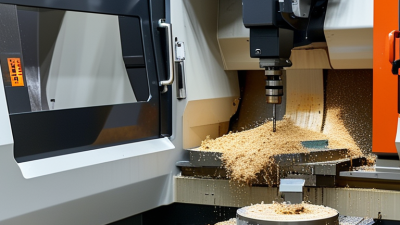
Spindle, chuck, and cutting performance should guide your decision. A powerful spindle is not automatically the best choice. Check its torque curve, speed range, bearing arrangement, and thermal stability. High torque supports heavy roughing, while higher speed improves finishing on smaller diameters. Ask for measured runout data, not only catalog values. Even small spindle errors can appear as visible rings on a turned surface.

The chuck The chuck must hold parts firmly without damaging thin walls. Compare gripping force, jaw travel, repeatability, and available soft-jaw options. A practical test uses a steel bar with several diameter changes. Watch for movement, vibration, and uneven tool marks.

Cutting performance Cutting performance depends on rigidity, feed control, coolant delivery, and chip evacuation. In my experience, a rigid machine often produces better results than one with a higher advertised horsepower. Still, real cutting trials can expose weaknesses that specifications hide.

Tips: Request a test cut using your actual material and tools. Measure roundness, surface finish, cycle time, and tool wear. Listen for chatter. It speaks early. Record the settings carefully, because operator skill can influence the result. I once focused too much on spindle speed and overlooked chuck access; that mistake made setup slower than expected. Review maintenance records and inspect the machine under continuous load, not only during a short demonstration.

Assess Control Systems, Automation, and Usability

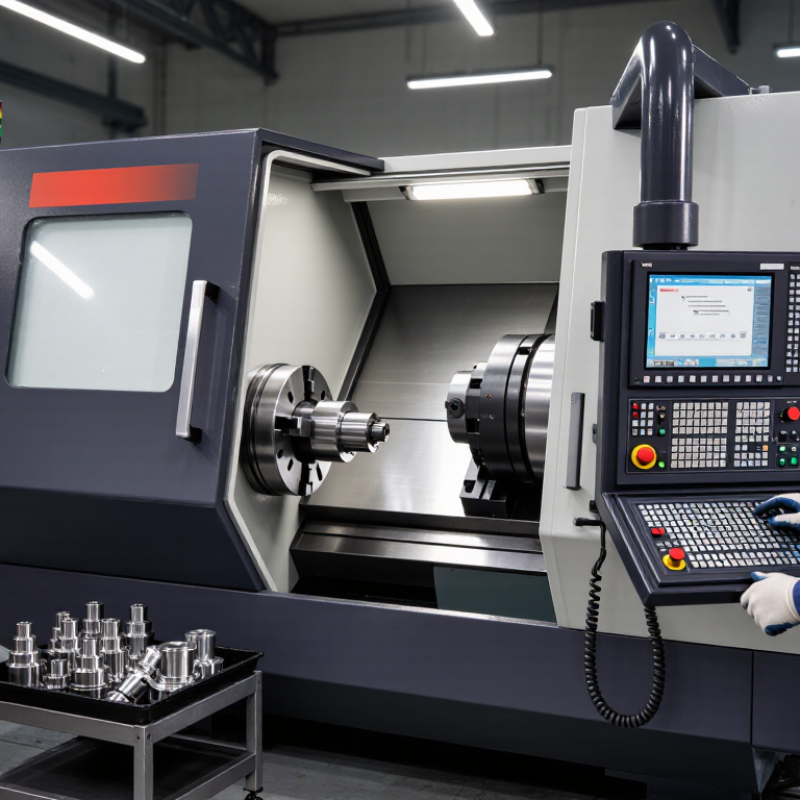
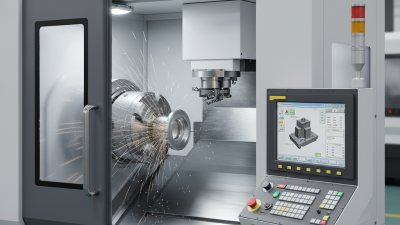
When choosing a CNC horizontal lathe, inspect its control system before comparing spindle power. The interface should show tool offsets, load trends, alarm history, and program status clearly. Operators need to recover from a tool alarm without searching through several menus. Test it live.

The International Federation of Robotics reported 541,302 industrial robots were installed worldwide in 2023. This figure shows why automation readiness matters during equipment selection. Check whether the lathe supports bar feeders, robotic loading, probing, tool monitoring, and automatic workpiece measurement. These functions can reduce handling time, but only when setup is simple and repeatable. A complicated automation cell may create new delays.

Usability deserves a timed shop-floor trial. Ask an operator to load a program, set a tool offset, respond to an alarm, and restart safely. Watch the hand movements. Count the screen changes. The 2024 Smart Manufacturing Report from a leading industrial research survey found that 95% of manufacturers planned to invest in artificial intelligence and machine learning. However, advanced software cannot replace practical training or clear controls. Operators still need readable buttons, consistent terminology, and visible confirmation messages. A perfect interface does not exist. During evaluation, record confusing steps instead of ignoring them. That honest list may reveal more than a polished demonstration.

How to Choose a CNC Horizontal Lathe? - Assess Control Systems, Automation, and Usability

Typical evaluation ranges for CNC horizontal lathes. Actual capabilities depend on machine configuration, workpiece material, tooling, programming, and operating conditions.
Evaluation Area What to Assess Basic CNC Configuration Production-Oriented Configuration Advanced Automation Configuration Practical Verification
Control Architecture Confirm the number of controlled axes, spindle synchronization, interpolation functions, and expansion capability. Usually 2 controlled axes with basic turning cycles and limited expansion. Typically 2 to 3 axes, with threading synchronization, tool-nose compensation, and programmable work offsets. Often includes live tooling, a second spindle, a Y-axis, or synchronized multi-channel control. Request the control-system specification and run a representative multi-operation program.
Programming Interface Evaluate G-code support, conversational programming, canned cycles, and program-editing functions. Manual G-code entry with standard roughing, finishing, drilling, and threading cycles. G-code plus conversational templates, graphical tool-path checks, and reusable machining cycles. Full program management, offline transfer, subprograms, probing routines, and coordinated machining functions. Ask an operator to create or edit a typical job without engineering assistance.
User Interface Check screen readability, soft-key logic, menu structure, alarm messages, and language options. Basic text display and conventional menu navigation. Color display, graphical guidance, searchable alarms, and clearer setup screens. Touchscreen or advanced graphical interface with job management, dashboards, and guided setup. Time a first-time operator performing tool offset entry, work offset setting, and alarm recovery.
Position Feedback Review encoder or scale feedback, resolution, repeatability, and thermal compensation. Motor encoder feedback suitable for general turning work. Closed-loop axis and spindle feedback with improved repeatability for production batches. Enhanced feedback, thermal compensation, and monitoring for demanding accuracy requirements. Run a repeatability test at the expected production temperature and workload.
Spindle Capability Match spindle speed, torque, power, bore, chuck size, and bar capacity to the workpiece range. Approximately 3,000–5,000 rpm and 5–15 kW for small to medium turning work. Approximately 3,500–6,000 rpm and 11–30 kW, depending on chuck and machine size. High-speed or high-torque spindle options, synchronized spindle functions, and larger through-bore choices. Compare the torque curve, not only peak power, at the cutting speeds used for your materials.
Tool Management Assess turret capacity, indexing time, driven-tool support, tool-life monitoring, and broken-tool detection. 8–12 static tool positions with manual tool-life tracking. 10–16 turret stations with automatic tool-number management and optional driven tools. 12–24 or more stations, tool-life monitoring, presetting, probing, and automated tool replacement procedures. Measure indexing time and verify that the turret accepts the tools required by the planned process.
Workholding Check chuck diameter, jaw options, collet compatibility, tailstock or steady-rest requirements, and clamping monitoring. Manual chuck or collet setup with operator-controlled clamping. Hydraulic or programmable chucking suitable for repeat production. Automatic chuck pressure control, part-presence sensing, bar feeding, or robotic loading. Test clamping repeatability and confirm that the workholding system fits the smallest and largest parts.
Loading and Unloading Determine whether the machine is intended for operator loading, bar feeding, gantry loading, or robotic handling. Manual loading; practical for prototypes, repairs, and low-volume work. Bar feeder or parts catcher can reduce handling during repeat batches. Robot, gantry, or integrated loading system designed for unattended or lights-out production. Calculate loading time, changeover time, payload, reach, and required floor space before purchase.
Setup and Probing Review tool measurement, workpiece probing, automatic offset updates, and setup documentation. Manual measurement and offset entry; low equipment cost but higher setup time. Tool presetter or touch probe support can reduce setup and first-piece adjustment. Automatic probing, in-process measurement, closed-loop offset correction, and documented setup recipes. Use a real job to compare setup time, first-piece approval time, and offset-entry errors.
Production Monitoring Assess cycle-time records, spindle-load monitoring, alarm history, utilization data, and remote access. Basic cycle counter and local alarm display. Cycle-time tracking, load meters, production counters, and USB or network program transfer. Network connectivity, machine-status reporting, predictive alerts, and integration with production-management systems. Confirm data-export formats, network security requirements, and whether monitoring works with existing systems.
Chip and Coolant Management Consider chip conveyor type, coolant flow, filtration, high-pressure delivery, and access for cleaning. Flood coolant and manual chip removal are common. Chip conveyor, larger coolant tank, and optional high-pressure coolant improve repeatability. High-pressure coolant, filtration, chip evacuation controls, and monitoring for unattended operation. Run the most difficult material and longest chip-producing operation in a practical demonstration.
Safety and Recovery Verify door interlocks, chuck confirmation, overload protection, emergency stops, and restart procedures. Standard guarding and operator-controlled recovery. Additional interlocks, spindle-load alarms, tool-life alerts, and clearer recovery guidance. Integrated cell safety, access monitoring, part-presence checks, and automated fault recovery sequences. Review applicable local safety requirements and test recovery from a simulated tool or sensor fault.
Usability and Training Estimate operator learning time, setup complexity, documentation quality, and access to technical support. Lower initial complexity; suitable for experienced operators handling varied jobs. Good balance between flexibility and repeatability for trained production operators. Higher initial training requirement, but lower manual involvement after processes are validated. Measure the time needed for training, changeover, alarm diagnosis, and routine maintenance.
Best-Fit Application Match the configuration to batch size, part variety, tolerance, labor availability, and required uptime. Prototypes, maintenance work, small batches, and frequently changing part families. Medium to high batch volumes with repeatable turning operations and regular changeovers. High-volume work, stable product families, extended shifts, and reduced operator intervention. Use annual volume, part mix, cycle time, labor cost, and required availability to calculate total cost of ownership.

Verify Installation, Support, Safety, and Total Cost

Choosing a CNC horizontal lathe requires more than comparing spindle speed and swing. Verify the installation plan before signing. Confirm floor loading, power quality, coolant drainage, chip removal, and temperature control. The U.S. Department of Energy reports that compressed-air leaks can waste 20–30% of compressor output. Check every pneumatic connection and specify leak testing during commissioning. A machine that cannot hold alignment on your shop floor becomes an expensive lesson.

Tips: Request a written acceptance test. Measure positioning accuracy, repeatability, vibration, and cycle time with your actual material. Ask who responds after delivery, how quickly parts arrive, and whether remote support requires secure access. Review operator training, preventive-maintenance intervals, guarding, emergency stops, and lockout procedures. ISO 12100 principles support risk reduction through design, guarding, and clear instructions. OSHA data recorded 888 U.S. fatal work injuries involving contact with objects and equipment in 2023. Safety is not paperwork.

Calculate total cost over five years. Include tooling, energy, coolant, calibration, software, training, service travel, and planned downtime. The initial price is only one line. A lower-cost lathe may need frequent alignment checks or specialized technicians. That assumption deserves testing. Use a sample production run and compare hourly cost, scrap, and operator time. Ask for maintenance records from comparable installations, not only sales projections. Leave room for uncertainty; real factories rarely perform like brochures.