Inquiry
Form loading...

2026 Best CNC Horizontal Lathes for Global Buyers

Choosing the right Cnc Horizontal Lathe in 2026 requires more than comparing spindle speed and purchase price. Global buyers now evaluate accuracy, automation, service access, energy use, and long-term operating risk. A machine may look impressive on a specification sheet. Its real value appears beside the operator, chip conveyor, and finished workpiece.

Industry forecasts from Grand View Research and Fortune Business Insights indicate continued growth in the global CNC machine tools market through this decade. The International Federation of Robotics reported 541,302 industrial robot installations worldwide in 2023. That figure shows why manufacturers increasingly connect turning centers with robots, bar feeders, probing systems, and digital monitoring. However, market estimates differ by methodology and product category. Buyers should examine the source, date, and regional assumptions carefully.

Professor Yusuf Altintas, a leading machining researcher, states in Manufacturing Automation, “The main objective of machining is to produce a part with the desired accuracy and surface finish at minimum cost.” That principle remains practical. A 2026 Cnc Horizontal Lathe must hold tolerances during long production runs, not only during a showroom demonstration. This guide compares leading models for automotive, aerospace, energy, medical, and general engineering applications. It considers chuck size, turning diameter, spindle power, thermal stability, control systems, tooling, maintenance, and local support. Some rankings may change with workpiece material or labor costs. That is worth admitting. No single lathe fits every factory. Experienced buyers should test sample parts before making a global purchasing decision.
2026 Best CNC Horizontal Lathes for Global Buyers

What Are CNC Horizontal Lathes and How Do They Work?

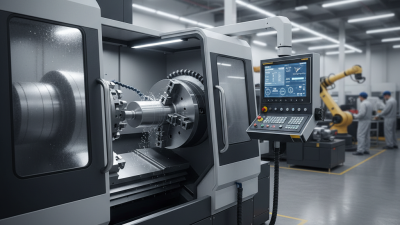
A CNC horizontal lathe is a computer-controlled machine that rotates a workpiece around a horizontal spindle. Cutting tools move along programmed X and Z axes to remove material accurately. The X axis controls the cutting diameter, while the Z axis manages movement along the workpiece length. The chuck holds the stock firmly. Common applications include shafts, bushings, threaded parts, and stepped cylinders.

An operator loads a digital program, secures the material, and sets tool offsets before machining begins. The spindle rotates at a selected speed while the turret moves through programmed paths. Coolant reduces heat and helps clear metal chips from the cutting area. Modern systems may use probes or gauges to check dimensions during production. In practical workshops, accurate setup matters as much as machine specifications. A small offset error can ruin an otherwise well-written program. The process is efficient, but it is not foolproof.

Tips: Confirm spindle bore, swing diameter, axis travel, and maximum workpiece weight before purchasing. Match the machine’s power and rigidity with your materials. Ask for sample parts and measured tolerances, not only catalog figures. Check service training, spare-part access, and control-system compatibility. Leave room for adjustment; real production conditions rarely match the first estimate.

Key Specifications That Define Horizontal Lathe Performance

2026 Best CNC Horizontal Lathes for Global Buyers

Key Specifications That Define Horizontal Lathe Performance

Horizontal lathe performance starts with the spindle, not the brochure’s maximum speed. A 12,000 rpm spindle can cut small aluminum parts quickly, but heavy steel work needs torque below 1,000 rpm. Check the power curve, rated torque, spindle taper, and bearing design. The chuck diameter and bar capacity should match your real production mix, not an ideal sample part. More speed is not always better.

Positioning accuracy and repeatability deserve separate attention. ISO 230-2:2014 requires bidirectional testing, including backlash-related behavior and thermal effects. Ask for measured results, not only nominal resolution. A 0.001 mm command increment may look impressive, yet thermal drift can move the cutting edge during a long cycle. That detail is easy to miss. The 2024 World Machine Tool Survey by Gardner Intelligence places global machine-tool consumption near 86 billion US dollars, showing why measurable uptime matters to international buyers.

Evaluate axis travel, rapid-traverse speed, turret indexing time, and chip evacuation together. A 24-station turret is useful only when tools remain rigid and balanced. Coolant pressure above 20 bar can improve chip control in deep boring, but filtration and pump maintenance become critical. MTConnect Institute guidance also supports collecting machine data for utilization and downtime analysis. Still, reported utilization can be misleading when operators leave machines powered on. Require acceptance tests using your material, tooling, tolerances, and cycle time. Production reality is less polished.

2026 Best CNC Horizontal Lathes for Global Buyers - Key Specifications That Define Horizontal Lathe Performance

Representative specification benchmarks for selecting a CNC horizontal turning platform by application, workpiece size, and production volume

Key Specification Compact Production Lathe Standard 2-Axis Turning Center High-Production Turning Center Heavy-Duty Horizontal Lathe
Typical application Small precision parts, fittings, shafts, and prototypes General industrial components and repeat production Automotive, hydraulic, aerospace, and high-volume batch work Large shafts, flanges, rollers, valve bodies, and heavy forgings
Maximum swing over bed 450–650 mm 600–900 mm 700–1,000 mm 900–1,600 mm
Maximum turning diameter 250–400 mm 350–600 mm 450–700 mm 650–1,200 mm
Maximum turning length 300–600 mm 500–1,000 mm 600–1,500 mm 1,000–4,000 mm
Spindle bore 52–66 mm 65–86 mm 86–112 mm 100–180 mm
Common spindle interface A2-5 or A2-6 A2-6 or A2-8 A2-8, A2-11, or equivalent A2-11, A2-15, or larger; some use a built-in chucking system
Recommended chuck size 200–250 mm / 8–10 in 250–315 mm / 10–12 in 315–500 mm / 12–20 in 500–1,000 mm / 20–40 in
Maximum spindle speed 4,000–6,000 rpm 2,500–4,500 rpm 1,500–3,500 rpm 500–2,000 rpm
Spindle motor power 11–18.5 kW 15–30 kW 22–45 kW 30–90 kW
Spindle torque range 100–350 N·m 250–800 N·m 500–1,800 N·m 1,500–10,000 N·m
Rapid traverse rate 20–30 m/min 24–36 m/min 30–40 m/min 10–24 m/min
Typical tool station capacity 8–12 stations 10–12 stations 12–24 stations 10–24 stations
Tool interface options VDI, BMT, or equivalent compact turret interface VDI or BMT turret interface BMT, VDI, or driven-tool turret interface Large VDI, BMT, gang-tool, or custom heavy-cutting tooling
Tailstock configuration Optional hydraulic or programmable tailstock Programmable hydraulic tailstock is common Programmable tailstock with live or rotating center options Hydraulic or steady-rest-supported tailstock for high axial loads
Positioning accuracy Approximately ±0.005–0.010 mm Approximately ±0.004–0.008 mm Approximately ±0.003–0.006 mm Approximately ±0.005–0.012 mm
Repeatability Approximately ±0.002–0.005 mm Approximately ±0.002–0.004 mm Approximately ±0.001–0.003 mm Approximately ±0.003–0.008 mm
Guideway design Hardened box ways or linear roller guides Box ways or linear roller guides, depending on cutting-duty requirements Heavy linear guides or box ways with enhanced damping Large box ways, hydrostatic ways, or reinforced guideway construction
Machine weight range 3,000–6,000 kg 4,500–10,000 kg 7,000–18,000 kg 12,000–60,000+ kg
Coolant system Standard flood coolant, typically 0.4–0.8 MPa Flood coolant, typically 0.7–1.5 MPa High-pressure coolant, typically 1.0–7.0 MPa High-flow flood coolant; high-pressure options depend on tooling and material
Chip-control features Basic chip conveyor or rear discharge option Inclined bed and automatic chip conveyor commonly available High-capacity chip conveyor, chip flushing, and programmable coolant control Heavy-duty chip conveyor, chip breaker tooling, and large-volume chip management
Automation compatibility Bar feeder, parts catcher, and basic gantry loading Bar feeder, parts catcher, robotic loading, and palletized workholding Robotic cells, bar feeders, automatic tool measurement, and process monitoring Robotic or crane-assisted loading, steady rests, automatic gauging, and custom fixtures
Best buying priority Footprint, cycle time, spindle speed, and small-part repeatability Work envelope, rigidity, turret capacity, and service availability Thermal stability, automation readiness, torque, and continuous-duty reliability Bed rigidity, spindle torque, load capacity, vibration control, and foundation requirements

Note: The figures are representative industry benchmarks for new CNC horizontal lathes and turning centers. Actual specifications vary by configuration, spindle option, chuck, tooling system, control package, and regional electrical standard. Buyers should confirm accuracy, torque curves, workholding limits, installation requirements, and compliance documentation before ordering.

Major Types of CNC Horizontal Lathes for Different Applications

For global buyers, CNC horizontal lathes should be selected by workpiece shape, volume, and required accuracy. Two-axis turning centers suit shafts, rings, and general facing or threading. Their enclosed beds and automatic tool changers support repeat production with limited operator handling. Slant-bed models improve chip flow and tool access, especially when cutting steel components in long shifts.

Mill-turn horizontal centers combine turning, drilling, tapping, and light milling in one setup. They reduce transfer errors on hydraulic bodies, fittings, and aerospace-style parts. However, their higher purchase price needs strong machine utilization. According to the International Federation of Robotics’ World Robotics 2024 report, factories operated about 4.28 million industrial robots worldwide. That figure supports integrated, automation-ready turning cells, but it does not prove every shop needs a mill-turn machine.

Bar-fed horizontal lathes fit high-volume production of small pins, connectors, and automotive components. Heavy-duty chucking lathes handle larger diameters and interrupted cuts, although cycle speed may be lower. Multi-spindle horizontal machines can multiply output, yet setup complexity becomes a real weakness. Oxford Economics’ 2024 global machine-tool outlook identifies manufacturing investment and automation as major demand drivers. Buyers should still check spindle power, bar capacity, thermal stability, service coverage, and local electrical standards. A perfect classification is impossible. Material behavior often changes the final choice.

The chart compares representative maximum turning-diameter ranges for major CNC horizontal lathe types. Heavy-duty flat-bed lathes are suited to large shafts and demanding roughing, while twin-spindle and mill-turn centers support higher productivity and multi-operation machining. Swiss-type machines are optimized for small, precision components. Actual capacity depends on the machine configuration, chuck size, spindle power, and tooling.

How to Compare the Best Models for Global Purchasing

When comparing the 2026 best CNC horizontal lathes, global buyers should begin with actual production needs. A compact model may suit small shafts, while a heavy-duty machine handles larger steel parts. Check swing diameter, turning length, spindle bore, motor power, and rapid-traverse speed. These figures reveal more than attractive catalog photos.

Accuracy also needs practical proof. Request test-cut results, repeatability data, thermal compensation details, and inspection records. Ask whether the control system supports your existing programs and operators. A familiar interface can reduce training time. Not always. I would also compare tool capacity, chip removal, coolant filtration, and access around the work zone. A machine that is difficult to clean may slowly reduce daily output.

For international purchasing, compare the complete ownership cost, not only the quoted machine price. Include crating, sea freight, installation, training, spare parts, maintenance, and local technical support. Confirm electrical requirements before ordering. Measure twice. Ask for references from factories with similar materials and batch sizes. Service response time matters when a production line stops. A cheaper model can look brilliant until a replacement sensor waits six weeks at customs. No comparison is perfect. Some suppliers provide excellent specifications but limited evidence from real workshops. A live machining demonstration, using your sample drawing, can expose that gap.

Installation, Compliance, Service, and Total Ownership Costs

For global buyers, the best 2026 CNC horizontal lathe is not always the fastest model. Installation conditions often decide real performance. Check foundation loading, door clearance, power quality, coolant temperature, and chip evacuation before ordering. A 400-volt machine may need a different transformer overseas. Small oversights become expensive delays.

Gardner Intelligence’s 2024 World Machine Tool Survey valued global machine-tool consumption at about 81.9 billion dollars in 2023. That competitive market increases pressure to compare total ownership costs, not only purchase prices. Request ISO 230-2 accuracy results, electrical conformity documents, risk assessments, and local regulatory evidence. Confirm whether the machine supports applicable ISO, IEC, CE, or regional requirements. Compliance paperwork should arrive before shipment.

Service capability matters more than impressive brochures. Ask for remote diagnostics, technician response times, training hours, and critical spare-parts availability. The U.S. Department of Energy’s Operations and Maintenance Best Practices Guide reports that predictive maintenance can reduce costs by roughly 8–12% compared with preventive maintenance. Downtime hurts. Include energy use, tooling, coolant filtration, calibration, software updates, and operator training in the ownership model. A spreadsheet can still lie. I would also budget for one unpleasant surprise, because installation schedules rarely remain perfect.