Inquiry
Form loading...

What Is a High Precision Laser Cutter?

A High Precision Laser Cutter is a machine designed to cut or engrave material with tightly controlled positioning and repeatable results. It directs a focused laser beam through optics, while motors and software guide the cutting head along a programmed path. Compared with a basic cutter, it aims to produce narrow slots, small holes, and clean edges more consistently. In practice, precision depends on more than the laser itself. Lens condition, focus height, bed alignment, material thickness, and motion calibration all affect the finished part. That distinction is easy to miss. A cut may look sharp yet still measure slightly off.

A capable system can process materials such as thin sheet metal, acrylic, wood, or fabric, depending on its laser type and power. Operators check kerf width, test settings on scrap, and inspect corners for heat marks or taper. These checks sound routine. They prevent expensive surprises. The term “high precision” is not a universal guarantee or a single specification. Manufacturers may report repeatability, positioning accuracy, or minimum feature size, and those figures describe different things. Actual performance also changes with maintenance and setup. A little variability remains. This article explains how the machine works, which specifications matter, and where its limits appear in real jobs. The goal is practical: choose equipment for the required tolerance, material, and production volume, not for a label alone.
What Is a High Precision Laser Cutter?

Definition and Key Features of a High-Precision Laser Cutter

A high-precision laser cutter uses a focused beam, controlled motion, and calibrated settings to make cuts with tight dimensional consistency. “Precision” is not one universal number: it depends on material, thickness, machine setup, and the tolerance a part requires. ISO 9013:2017, a technical standard for thermal-cut quality, organizes cuts into five quality ranges and evaluates factors such as perpendicularity and cut-surface profile. This gives engineers a shared way to assess edge quality instead of relying on the word “precision” alone.

Key features include a stable motion system, accurate beam focus, repeatable positioning, and control of cutting speed and assist gas. In practice, a small focus shift can leave a wider kerf or rougher edge on a thin stainless-steel panel. A well-set machine can reduce that variation, but the result still depends on material condition and maintenance. Measure the actual part. High precision is not a magic label. Operators should check dimensions and edge quality against the drawing, then adjust parameters when results drift. Even careful setups need review; that part is easy to overlook.
Core Components and Their Functions

What Is a High Precision Laser Cutter?
Core Components and Their Functions

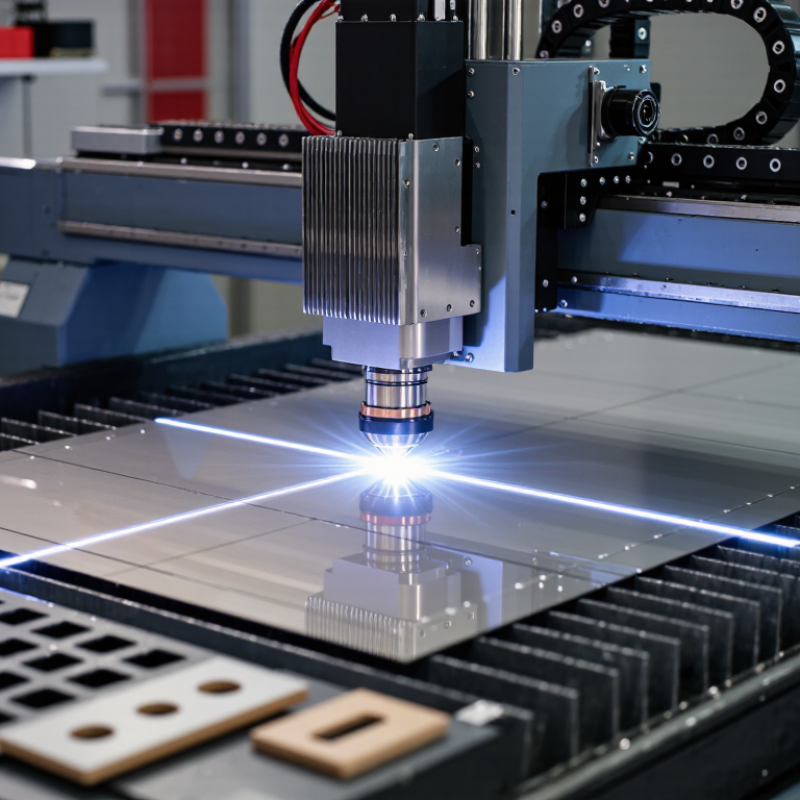
A high-precision laser cutter is a coordinated system, not just a powerful beam. Its laser source supplies energy; optics guide and focus it into a small spot. The motion system moves the head or workpiece along programmed paths, while encoders report position. A controller adjusts speed and output to keep cuts consistent. Even a slight lens contamination can widen the kerf and leave a rough edge. Small details matter.

The assist-gas nozzle clears molten material from the cut and helps manage heat. A rigid frame and calibrated drive system reduce vibration, especially around corners. According to MarketsandMarkets’ 2023 Laser Processing Market report, the global market was estimated at US$6.8 billion in 2023 and forecast to reach US$11.1 billion by 2028. That growth reflects broad industrial adoption, but it does not prove any individual machine’s accuracy. Check repeatability and positioning specifications, and test them on your material. A specification sheet can still leave practical questions unanswered.

Tips: Keep optics clean, verify focus before production, and inspect a test cut under consistent lighting. Record the material, thickness, speed, and gas settings. That simple log often reveals drift before the edges do.

What Is a High Precision Laser Cutter? - Core Components and Their Functions

Core Component Primary Function Contribution to Cutting Precision Key Consideration
Laser source Generates the laser beam used to heat, melt, or vaporize material. Source type and output depend on the machine and application. Stable output and a suitable beam profile help produce consistent kerf width and edge quality. Match wavelength, power, and beam characteristics to the material and process.
Beam delivery system Routes the beam from the source to the cutting head using mirrors, optical fiber, or other beam-path components. Maintains beam alignment and delivery quality as the cutting head moves. Keep optical components clean, aligned, and protected from contamination.
Focusing optics and cutting head Focuses the beam to a small spot on the workpiece; the head may also carry the assist-gas nozzle and height-sensing hardware. Focus position and spot size affect cut width, energy density, and the ability to follow changes in material surface height. Use optics and nozzle configurations suited to the material, thickness, and cutting process.
Motion system Moves the cutting head, worktable, or both along programmed axes using motors, guides, and drive components. Low backlash, smooth motion, and accurate positioning support precise contours and repeatable dimensions. Machine rigidity, axis calibration, and mechanical condition influence accuracy.
Controller and CNC software Converts part geometry and cutting settings into coordinated motion and laser commands. Accurate interpolation, timing, and motion planning help maintain the intended path, especially around corners and small features. Correctly configure the program, material settings, and machine calibration.
Workholding and support bed Supports the workpiece and keeps it in a stable position during cutting. Reduces movement and helps preserve the workpiece’s position relative to the programmed path. Use appropriate support and secure parts without distorting thin material.
Assist-gas system Directs gas through the nozzle to clear molten material and, depending on the process, support the cutting reaction. Consistent gas flow and pressure help produce a cleaner cut and reduce dross or heat-related defects. Gas type, pressure, nozzle condition, and alignment must suit the material and thickness.
Height sensing and autofocus Measures the distance between the cutting head and workpiece; some systems adjust focus automatically. Helps maintain the intended standoff distance and focal position across uneven or moving material. Sensor calibration and a clean sensing surface are important for reliable tracking.
Cooling system Removes heat from heat-sensitive parts of the laser source and machine. Stable operating temperatures help reduce output variation and protect system components. Follow the equipment’s specified coolant, flow, and temperature requirements.
Enclosure, extraction, and safety interlocks Contain hazardous radiation and process emissions, and prevent operation under unsafe conditions. Maintain a controlled operating environment that supports reliable production and protects operators. Keep guards and interlocks functional; provide suitable fume extraction for the material being cut.

How the Laser Cutting Process Works

What Is a High Precision Laser Cutter?

How the Laser Cutting Process Works

Grand View Research estimated the global laser-cutting machine market at about $5.2 billion in 2023. The figure reflects growing industrial use, but market size alone does not prove cutting accuracy. Precision depends on the machine, material, settings, and maintenance.

A CNC system guides the laser head along a programmed path. The focused beam heats a small area until the material melts or vaporizes. Assist gas then clears debris from the cut. The operator sets power, speed, focus, and gas pressure to suit the material and thickness. Too much heat can widen the kerf or leave a rough edge. A tiny shift in focus matters.

Tips: Test settings on a scrap piece of the same material and thickness. Inspect the edge under good light; look for dross, discoloration, and taper. Record the settings, but treat them as a starting point—not a guarantee. Dust on the lens, a loose fixture, or a warped sheet can change results. Even a careful setup needs checking.

What Is a High Precision Laser Cutter? — How the Laser Cutting Process Works

Laser cutters focus a beam onto a material, heating it until it melts or vaporizes. Assist gas then clears material from the cut. The chart compares typical source wavelengths: CO₂ lasers operate near 10.6 μm, while Nd:YAG and fiber lasers operate near 1.06–1.07 μm. Wavelength is one factor in how a laser interacts with a material; precision also depends on focus, beam quality, and cutting conditions.

Factors That Affect Cutting Accuracy

What Is a High Precision Laser Cutter?

Factors That Affect Cutting Accuracy

Cutting accuracy depends on more than the laser’s rated spot size. A clean, correctly aligned optical path helps the beam reach the material consistently. Even slight lens contamination can soften edges or leave uneven marks. Focus matters, too. A focal point set above or below the surface may widen the cut, especially through thicker stock.

Material changes the result. Sheet thickness, surface coating, moisture, and internal stress can all affect how heat moves through it. Power and cutting speed must suit the material; moving too slowly may char an edge, while moving too quickly can leave incomplete cuts. Assist-gas pressure and nozzle condition also influence the cut line. Small details add up.

The machine itself needs attention. Loose belts, vibration, or an uncalibrated motion system can shift the beam path, sometimes by a fraction that matters in a close-fitting part. Heat buildup may also distort thin pieces during longer jobs. A test cut on the actual material can reveal problems before a full run. It is not a perfect guarantee, though: room temperature and material variation can still change results. Regular checks of focus, nozzle alignment, and sample dimensions make accuracy more repeatable.

Materials and Applications of High-Precision Laser Cutting

High-precision laser cutting is used on materials that need fine features, repeatable dimensions, or clean outlines. Thin stainless steel and aluminum are common choices for brackets, instrument panels, and small enclosures. Acrylic can produce smooth, polished-looking edges, while wood and paper suit models, displays, and packaging. Some plastics and composites require careful testing because their coatings, fillers, or resins may discolor or release harmful fumes when heated.

Material thickness, wavelength, focus, and cutting speed all affect the result. A narrow kerf helps create tiny slots and closely spaced contours, but it does not guarantee perfect parts. A clean edge is not automatic. On a metal sheet, the underside may collect burrs; on acrylic, excess heat can leave a hazy rim. Operators check sample cuts, adjust settings, and use suitable extraction and assist gas. Small changes matter.

These capabilities support electronics, automotive components, architectural models, and custom medical-device parts. In electronics, precise openings can align with switches or connectors. In model making, intricate shapes can be cut from thin sheets with little tool pressure. Yet material choice should follow the part’s job, not just its appearance. I would still inspect the first batch closely; even a well-tuned process can drift as lenses collect dust or material varies.