Choosing a Fiber Laser Welding Machine in 2026 requires more than comparing wattage and price. The right machine must match your materials, joint design, production volume, and operator skill. Stainless steel, aluminum, copper, and galvanized sheets each respond differently to laser energy. A machine that performs beautifully on thin stainless steel may struggle with reflective copper. That detail is easy to overlook.
Real workshop experience shows that stable results depend on the entire system. Laser power matters, but beam quality, focusing accuracy, shielding gas control, wire feeding, and cooling performance matter too. A reliable supplier should provide measurable specifications, sample welds, maintenance guidance, and realistic production data. Marketing claims are not enough. Ask for independent testing where possible.
Safety comes first.
This guide examines the practical factors behind a confident purchase. It considers handheld and automated systems, welding speed, penetration, heat distortion, energy use, software controls, and long-term service support. It also explains how to compare total ownership costs instead of focusing only on the initial quotation. A cheaper machine can become expensive after repeated downtime, weak technical support, or unavailable parts.
No single Fiber Laser Welding Machine suits every factory. Even experienced buyers can misjudge future workloads or underestimate training needs. That uncertainty deserves attention. By reviewing material requirements, workspace conditions, compliance expectations, and return-on-investment assumptions, manufacturers can make a more defensible decision in 2026. The goal is not the most powerful machine. It is the most dependable fit.
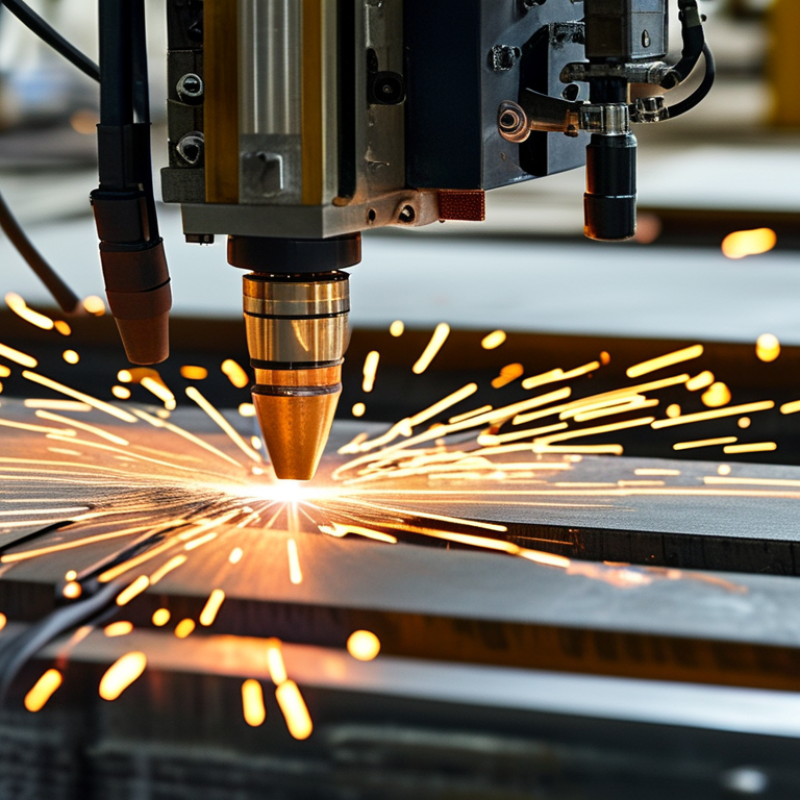
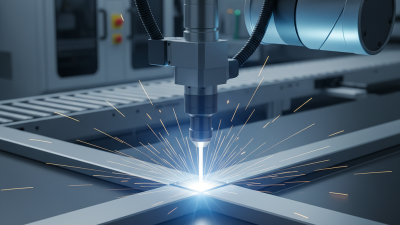
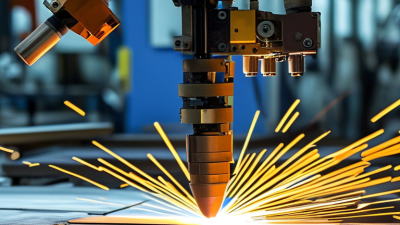
A fiber laser welding machine joins metal by concentrating light into a tiny, controlled area. Its laser source produces a high-energy beam inside an optical fiber. Mirrors and lenses guide the beam toward the workpiece. At the focal point, the metal melts and forms a narrow weld pool. As the beam moves, the pool cools into a solid joint. Shielding gas reduces oxidation around the weld. The process is precise. Unlike arc welding, it usually creates less spatter, narrower heat distortion, and cleaner edges.
Choosing a machine in 2026 requires more than checking laser power. Match power with material thickness, reflectivity, joint design, and production speed. Thin stainless steel may need modest power and careful pulse control. Thicker aluminum often demands stronger output and accurate heat management. Ask for a sample weld using your actual material. Measure penetration, bead width, distortion, and tensile strength. Do not trust appearance alone. A bright, smooth bead can still hide incomplete fusion.
The focusing lens, nozzle, and wire-feeding system also affect daily results. A dirty lens can enlarge the spot and weaken penetration. Operator training remains essential, even with automated settings. I once blamed the laser for an uneven seam, but the real problem was poor clamping. Small gaps matter. Keep records of tested parameters, gas flow, travel speed, and maintenance. A machine that looks advanced may still underperform when its controls, cooling system, or safety enclosure do not fit your workshop.
When choosing a fiber laser welding machine, check material compatibility before advertised power. Most systems handle carbon steel, stainless steel, aluminum, copper, and titanium. Each material responds differently to heat, reflection, and shielding gas.
A 1 mm stainless panel may need gentle energy control to prevent distortion. Copper reflects more laser energy and often requires higher power, careful focus, and stable clamping. Mixed-metal joints can work, but they demand realistic testing.
Applications range from automotive components and kitchen equipment to electrical enclosures, frames, and precision metal parts. The machine should match your joint design, thickness range, production speed, and required finish.
Handheld welding suits repairs and varied workpieces. Automated systems offer better repeatability for large batches. In practical trials, a clean bead can still hide weak penetration.
Cut-and-break tests, cross-sections, and tensile checks provide stronger evidence. I would not trust appearance alone.
Tips: Test your actual materials, not only sample plates. Record power, speed, focal position, wire size, and gas flow. Keep a small trial log. It prevents repeated mistakes. Ask whether the supplier provides application testing and safety guidance. Some surfaces need cleaning before welding, especially oily, oxidized, or coated metal. Even a capable machine may perform poorly when preparation is inconsistent.
Laser power should match material type, thickness, joint design, and production volume. Higher power is not automatically better. It can increase heat input, distortion, and operating costs. In practical trials, a 1.5 kW system may handle thin stainless steel efficiently. Thicker aluminum parts may require more power and careful parameter control. Ask the supplier for sample welds using your actual material and joint geometry.
Speed matters when production targets are high, but fast welding can reduce penetration or create uneven beads. Compare travel speed, penetration depth, wire-feed stability, and cycle time together. Precision depends on beam control, fixture accuracy, motion stability, and operator adjustment. A narrow, clean bead is useful only when the joint remains correctly aligned. Measure tensile strength, bead width, spatter, and distortion after repeated tests. One trial is not enough.
Automation should fit your process, not simply increase complexity. Useful features may include programmable recipes, seam tracking, vision inspection, and automatic wire feeding. Check how quickly operators can change products and correct errors. I once focused too heavily on maximum speed and underestimated fixture preparation. That mistake reduced real output. Keep maintenance access simple. Review safety controls, training requirements, energy use, and documented service support before purchasing. A reliable machine should deliver consistent welds during long shifts, not only impressive demonstrations.
How to Choose a Fiber Laser Welding Machine in 2026?
What Machine Features Affect Quality, Safety, and Ease of Use?
When choosing a fiber laser welding machine in 2026, look beyond power ratings. Weld quality depends on beam stability, spot-size control, and accurate energy delivery. Adjustable pulse settings help manage thin sheets, corners, and heat-sensitive parts. Watch the weld pool through a clear, well-lit enclosure. In real workshops, visibility often prevents more defects than higher wattage. I have seen operators blame material variation when poor focus caused the problem.
Safety features should be practical, not decorative. Interlocked doors, fume extraction, emergency stops, and grounding checks reduce avoidable exposure and equipment damage. The control panel should display power, speed, gas flow, and alarms clearly. Simple menus shorten training time and reduce rushed settings. Try the machine with gloves and protective eyewear. If controls feel awkward, they will feel worse during a long shift. Automated presets cannot replace material testing and trained judgment.
Ask for repeatability data, maintenance records, and a live demonstration using your joint design. Check torch balance, cable flexibility, cooling performance, and consumable access. A reliable machine should restart consistently after a planned stop. Do not ignore software updates or calibration intervals. They affect quality quietly. My preference changed after an easy-to-clean enclosure outperformed a faster, complicated system. The best choice may be less powerful, but easier to control every day.
| Machine Feature | Typical Specification or Option | Effect on Welding Quality | Effect on Safety | Effect on Ease of Use | Selection Priority |
|---|---|---|---|---|---|
| Laser Power | 1,000–1,500 W for thin sheet and general fabrication; 2,000–3,000 W for thicker sections and higher throughput. | Provides sufficient penetration and welding speed when matched to material thickness. Excess power can increase burn-through, spatter, and distortion. | Higher power requires stricter enclosure, interlock, beam-delivery, and protective-equipment controls. | Correctly sized power reduces the need for repeated parameter adjustments and improves process consistency. | High |
| Wavelength | Near-infrared fiber-laser wavelength, commonly around 1,070 nm. | Supports efficient energy delivery for many steels, stainless steels, aluminum alloys, and other conductive metals. | Invisible near-infrared radiation can cause serious eye injury without adequate guarding and certified laser protection. | One source can cover a broad range of common metalworking applications, reducing equipment changes. | High |
| Beam Quality | Low beam parameter product or a high-quality multimode beam designed for stable focusing. | Improves energy concentration, penetration stability, bead appearance, and the ability to weld narrow joints. | Stable beam delivery reduces unexpected process changes, but does not remove the need for laser controls. | Produces a wider usable process window and makes parameter development easier. | High |
| Power Stability | Closed-loop monitoring with stable output and controlled ramp-up and ramp-down. | Helps maintain consistent penetration and reduces defects caused by output fluctuation at the start or end of a weld. | Controlled power behavior reduces sudden energy changes during operation. | Improves repeatability between operators, shifts, and production batches. | High |
| Welding Head | Handheld or robotic head with protective window, adjustable focus, and accessible optics. | Focus adjustment and clean optics influence spot size, penetration, bead width, and weld appearance. | A protective window helps shield internal optics from fumes and spatter; an interlocked trigger is preferable on handheld systems. | Quick-change windows and simple focus adjustment reduce maintenance time and setup effort. | High |
| Oscillation or Wobble Function | Adjustable width, frequency, and pattern, such as circular, linear, or figure-eight motion. | Helps bridge small gaps, control bead width, improve sidewall fusion, and distribute heat more evenly. | Allows lower local energy density in some applications, although the complete process still requires validation. | Reduces the need for highly precise joint fit-up and provides more application flexibility. | High |
| Wire-Feeding System | Optional automatic wire feeder with adjustable feed speed and synchronized start/stop control. | Supports gap filling, reinforcement, and alloy addition while improving bead uniformity compared with manual wire feeding. | Reduces the operator's need to place filler wire close to the laser beam and hot workpiece. | Automatic synchronization makes filler-wire operation easier to learn and repeat. | Medium–High |
| Shielding Gas Control | Regulated argon or argon-based gas supply with a stable flow meter; typical flow must be set by application trials. | Protects the molten pool from atmospheric contamination and helps prevent porosity, oxidation, and discoloration. | Proper gas routing reduces the chance of unstable shielding caused by leaks or incorrect connections. | A pressure regulator, flow indicator, and clear gas alarm simplify setup and troubleshooting. | High |
| Cooling System | Closed-loop water chiller with temperature, flow, and level monitoring. | Maintains stable laser-source and welding-head temperatures, helping prevent thermal drift and unexpected shutdowns. | Flow and temperature protection can stop the machine before overheating damages critical components. | Automatic alarms and status displays make daily checks faster and reduce unplanned downtime. | High |
| Process Monitoring | Real-time monitoring of laser power, temperature, gas flow, alarms, and operating status. | Helps identify deviations that may cause incomplete fusion, excessive penetration, porosity, or inconsistent appearance. | Fault detection can trigger a controlled stop when abnormal operating conditions are detected. | Stored records and clear fault messages shorten troubleshooting and support quality audits. | High |
| Control Interface | Touchscreen or industrial controller with recipe storage, password levels, and multilingual menus. | Saved recipes reduce variation in laser power, speed, wobble, gas, and wire-feed settings. | Access control helps prevent unauthorized changes to validated process parameters. | Guided setup, parameter presets, and clear alarms reduce training time and operator error. | High |
| Laser Safety Enclosure | Fully enclosed Class 1 system for production cells, or a controlled laser area with appropriate barriers and interlocks. | Stable enclosure design does not directly change weld penetration, but it supports controlled and repeatable operation. | Prevents access to hazardous laser radiation during normal operation when correctly designed and maintained. | Enables safer routine production and simplifies operator procedures compared with an open, uncontrolled beam path. | Critical |
| Interlocks and Emergency Stop | Door interlocks, keyed enable control, emergency-stop buttons, beam-off logic, and fault shutdowns. | Indirect effect; reliable shutdown prevents a fault from developing into uncontrolled equipment behavior. | Essential safeguards that interrupt laser emission when a protected access point opens or an emergency stop is pressed. | Clear status indicators help operators understand whether the machine is ready, paused, or in a fault state. | Critical |
| Fume Extraction | Local extraction with suitable filtration for the materials, coatings, and consumables being welded. | Reduces deposits on optics and improves visibility of the weld area; filtration must match the generated contaminants. | Controls hazardous fumes and particles, but it does not replace a risk assessment or suitable respiratory controls where required. | Cleaner work areas and better visibility make inspection and cleanup easier. | Critical |
| Fixture and Workholding | Rigid, adjustable fixtures with accurate alignment and adequate heat tolerance. | Reduces joint movement, gap variation, distortion, and alignment-related defects. | Secure workholding lowers the risk of unexpected part movement during welding. | Repeatable positioning speeds loading and unloading and reduces reliance on operator alignment skill. | High |
| Material and Joint Compatibility | Validated settings for carbon steel, stainless steel, aluminum, galvanized parts, dissimilar metals, and selected alloys. | Material reflectivity, thermal conductivity, surface condition, thickness, and joint design strongly influence penetration and defects. | Coatings, zinc, oils, and unknown alloys may create additional fume or process hazards and require specific controls. | A machine with documented application trials reduces guesswork when introducing new parts. | Critical |
| Maintenance and Service Access | Accessible protective windows, filters, cooling connections, diagnostic logs, and documented maintenance intervals. | Clean optics, stable cooling, and timely maintenance preserve beam delivery and weld consistency. | Maintenance procedures should include energy isolation, laser safety controls, and trained personnel. | Easy access and clear service instructions reduce downtime and simplify preventive maintenance. | High |
| Automation and Connectivity | Robot or CNC interfaces, digital I/O, remote diagnostics, data export, and production traceability options. | Supports consistent travel speed, position control, recipe execution, and weld data recording. | Interfaced safety circuits can coordinate machine stops with robots, guarding, and external emergency systems. | Useful for repeat production, but integration should be planned around the complete cell and operator workflow. | Medium–High |
| Training and Documentation | Operator manual, safety procedures, parameter guidance, maintenance schedule, and practical application training. | Correct setup and inspection procedures improve weld quality more reliably than specifications alone. | Training is necessary for safe operation, hazard recognition, emergency response, and maintenance isolation. | Well-structured documentation reduces dependence on individual operator experience. | Critical |
| Acceptance Testing | Sample weld trials, visual inspection, dimensional checks, macro-section testing, and application-specific qualification. | Confirms that the selected power, speed, focus, wobble, gas, and wire settings meet the required joint performance. | Verifies safety functions, alarms, interlocks, extraction, and emergency-stop behavior before production use. | Provides operators with proven recipes and a documented baseline for future troubleshooting. | Critical |

Practical selection rule: Choose the machine only after testing representative materials, thicknesses, joint designs, surface conditions, and production speeds. Laser safety requirements should be assessed by qualified personnel before installation and operation.
Choosing a fiber laser welding machine in 2026 requires more than comparing purchase prices. MarketsandMarkets estimates the industrial laser market will grow from about USD 7.1 billion in 2024 to USD 11.8 billion by 2029. Rising demand can hide inflated quotations. Request a complete cost sheet, including optics, shielding gas, chiller service, software updates, training, and downtime. A low-cost machine may become expensive when a protective window fails every few weeks. Ask for real weld samples using your material, thickness, joint design, and production speed. Test evidence matters more than polished brochures.
Maintenance should be measured in hours, not promises. Check cleaning access, spare-part availability, remote diagnostics, and technician response times. The International Federation of Robotics recorded 541,302 industrial robot installations worldwide in 2023, showing how strongly manufacturers value repeatable automation. Your supplier should explain robot communication, safety integration, calibration, and future upgrades in practical terms. Avoid vague “lifetime support.” Get service targets in writing. During supplier visits, inspect the service area and ask to speak with two existing users. They may reveal small problems sales teams miss. My own caution is simple: a five-year return model is useful, but imperfect. It should include rejected parts, operator learning time, energy consumption, and one uncomfortable repair scenario. Long-term value comes from stable weld quality and accessible support, not the newest screen.
Recommended evaluation weighting for comparing purchase cost, maintenance requirements, supplier capability, and long-term value.
Use the weighting as a procurement framework rather than focusing only on the initial machine price. A reliable comparison should include operating costs, preventive maintenance, technical support, spare-parts availability, warranty coverage, productivity, and expected service life.