Inquiry
Form loading...

Why Use a CNC Lathe Metal Protective Cover?

Why Use a CNC Lathe Metal Protective Cover?

Modern machining demands more than cutting accuracy. It demands controlled, repeatable, and safer production. The International Federation of Robotics reported 541,302 industrial robots installed worldwide in 2023. This growth reflects faster automation and tighter production cycles. It also increases the need for dependable machine protection.

A Cnc Lathe Metal Protective Cover helps contain chips, coolant mist, and hot metal fragments around the work zone. It can protect operators from direct exposure while supporting cleaner machine interiors. The cover also shields guideways, ball screws, sensors, and nearby electrical components. Less contamination may reduce cleaning time and unplanned maintenance. Small failures matter.

Industry guidance supports this approach. OSHA identifies machine guarding as a key control against hazards from rotating parts, flying chips, and sparks. ISO 23125 also addresses safety requirements for turning machines. These standards do not make every cover automatically compliant. Correct design, installation, inspection, and operator training remain essential.

The practical difference is visible on the shop floor. A poorly protected lathe may leave sharp chips across the tray by midday. Coolant can reach sliding surfaces and carry abrasive debris into critical areas. A properly fitted metal cover creates a stronger separation between the cutting process and the operator. It can also improve housekeeping and maintenance visibility.

Still, a protective cover is not a magic shield. Poor sealing, damaged panels, or blocked access can create new problems. Selection should consider machine travel, heat, coolant type, chip size, access points, and cleaning routines. This article examines those factors and explains why protection should be treated as a production requirement, not merely an accessory.
Why Use a CNC Lathe Metal Protective Cover?

What Is a CNC Lathe Metal Protective Cover?

What Is a CNC Lathe Metal Protective Cover?

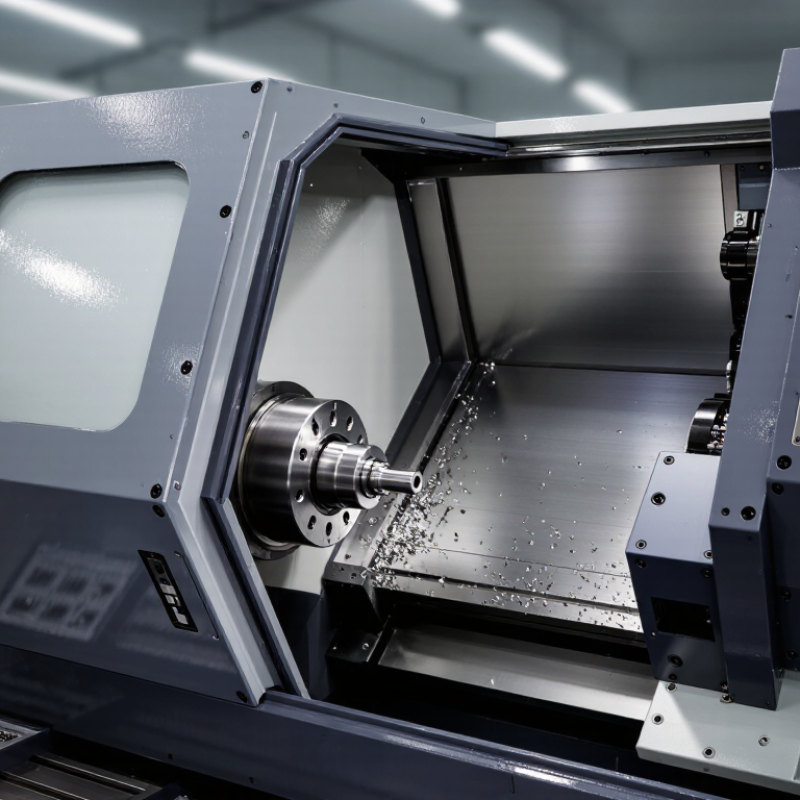
A CNC lathe metal protective cover is a rigid enclosure around the machining zone. It usually includes steel panels, sliding doors, a roof, viewing windows, and sealed joints. The cover contains hot chips, cutting fluid, dust, and occasional sparks during turning operations. It also separates operators from rotating chucks, tools, and unfinished workpieces. However, it is not a magic shield. A damaged window or poorly aligned door can still create serious exposure.

In practical workshops, the enclosure supports cleaner and more controlled production. Coolant stays inside the work area instead of spreading across the floor. Metal chips collect in a predictable location, making removal easier. The cover can also reduce noise and protect nearby equipment from abrasive debris.

According to the U.S. Bureau of Labor Statistics, private industry recorded about 2.6 million nonfatal workplace injuries and illnesses in 2023. This figure does not isolate CNC lathes, but it shows why physical risk controls remain important.

A reliable cover needs suitable thickness, corrosion resistance, stable hinges, and effective door interlocks.

Its viewing panel must resist impact and remain clear under coolant mist.

ISO 14120 emphasizes strength, durability, and safe design for machinery guards. In my view, maintenance is often underestimated. Even a well-built cover loses value when seals harden, bolts loosen, or interlocks are bypassed.

The design should match the lathe’s travel, chuck size, chip volume, and cleaning routine. Otherwise, a protective cover becomes an expensive obstruction rather than useful machine protection.
Which Hazards Does a Protective Cover Help Control?

Why Use a CNC Lathe Metal Protective Cover?

A CNC lathe protective cover helps control several hazards created during cutting. Sharp chips can leave the work area at high speed. They may strike an operator’s face, hands, or nearby equipment. Hot metal chips can also burn skin and ignite contaminated materials. The U.S. Occupational Safety and Health Administration reports that about 18,000 workplace injuries each year, including amputations, lacerations, and crushing injuries. A properly fitted cover creates a physical barrier around the chuck, tool, and cutting zone.

Coolant is another concern. Without containment, fluid can splash onto walkways and create slip hazards. Fine mist may affect breathing comfort and reduce visibility around the machine. A sealed cover also limits contact with rotating components, although it cannot replace interlocks, lockout procedures, training, or suitable eye protection. The U.S. Bureau of Labor Statistics recorded approximately 2.6 million nonfatal workplace injuries and illnesses in 2023. Machining environments require careful controls because small failures can develop quickly.

Chips are fast. Entanglement remains serious. A cover should resist impact, maintain clear visibility, and allow safe cleaning without reaching into the cutting zone. In practice, poor installation can leave gaps near the door or base. That gap matters. Specifications should be reviewed against real cutting speeds, material types, coolant pressure, and operator behavior, not only drawings. A protective cover is useful, but it is not magic.

How Does the Cover Protect Operators and Machine Components?

A CNC lathe protective cover is more than a sheet-metal enclosure. It creates a controlled boundary around rotating chucks, cutting tools, chips, and coolant. During turning, a broken insert can release fragments at high speed. A properly designed cover can absorb or redirect that energy. The viewing window keeps the process visible. Operators also avoid direct contact with sharp swarf during loading, inspection, and cleaning. Small details matter. Door interlocks should stop hazardous motion when access opens.

The risk is not theoretical. OSHA’s FY2024 Top 10 cited 1,370 violations of 29 CFR 1910.212, Machine Guarding, ranking tenth among frequently cited standards. This figure covers many machine types, not only lathes. Still, it signals a persistent control gap. ISO 23125:2015 addresses safety for turning machines, including guarding, access, and protection from ejected material. A protective cover should match the machine’s speed, workholding method, tooling, and coolant pressure. Generic panels can fail here.

Protection also extends machine service life. A sealed enclosure limits chips and abrasive coolant from reaching guideways, ball screws, sensors, and electrical cabinets. Cleaner components support steadier accuracy and reduce unplanned cleaning. Yet a cover is not magic. A fogged window, weak latch, damaged seal, or bypassed interlock can restore the original hazard. Maintenance teams should inspect fasteners, viewing panels, interlocks, and drainage points routinely. The honest weakness is human behavior. If access feels slow, someone may defeat the safeguard. Design for visibility, easy cleaning, and safe access instead.

Why Use a CNC Lathe Metal Protective Cover? - How Does the Cover Protect Operators and Machine Components?

Protection Dimension Potential Hazard or Damage Protective Cover Feature How the Cover Provides Protection Typical Design or Performance Consideration Main Benefit
Operator Safety Contact with rotating chucks, workpieces, tools, or expelled fragments Fully enclosed metal guard with a viewing window and access door Creates a physical barrier between the operator and the rotating work zone The guard should remain closed during automatic operation and be assessed for impact resistance as part of the machine risk assessment Reduces the likelihood and severity of entanglement and impact injuries
Interlock Control The machine continues running while the access door is open Coded or mechanically monitored safety interlock Sends a safety signal to stop or inhibit hazardous motion when the guard is opened Interlock performance should be validated according to the machine safety design and applicable safety requirements Prevents routine access to moving parts during operation
Chip Containment Sharp chips are thrown toward the operator or scattered around the work area Overlapping sheet-metal panels, sealed joints, and a bottom chip tray Deflects and collects chips inside the machining enclosure Internal surfaces should avoid unnecessary ledges where chips can accumulate Improves housekeeping and reduces cuts, slips, and cleanup time
Coolant and Cutting Fluid Coolant spray, oil mist, and fluid leakage reach the operator or floor Sealed enclosure, sloped panels, door seals, and drainage channels Keeps fluid inside the machining area and directs it toward collection or filtration equipment Drainage capacity should match the coolant flow rate; seals and drains require regular inspection Reduces splash exposure, floor contamination, and slip hazards
Machine Guideways Chips and abrasive particles enter guideways and sliding surfaces Fixed covers, telescopic way covers, and protected access openings Blocks contaminants from reaching precision sliding and positioning components Covers should accommodate full axis travel without binding or creating chip traps Helps preserve positioning accuracy and reduces wear on guideways
Spindle and Drive Components Coolant, chips, and metal dust contaminate bearings, motors, or drive assemblies Internal shields, protected service openings, and sealed enclosure sections Limits the path of contaminants and prevents direct impact on sensitive components Ventilation must be designed to control heat without allowing chips or fluid to enter Supports longer service intervals and more stable machine operation
Viewing and Visibility The operator opens the enclosure to inspect the cutting process Transparent impact-resistant viewing panel with integrated lighting Allows visual monitoring while the protective barrier remains closed The window should remain clear, securely mounted, and replaced if cracked, deeply scratched, or chemically damaged Improves process observation without removing the guard
Noise and Airborne Contamination Cutting noise, coolant mist, and fine particles escape into the workspace Enclosed panels with controlled ventilation or mist extraction Reduces direct transmission of noise and helps contain airborne contaminants Noise reduction varies by enclosure construction; extraction should be selected for the fluid and process used Improves the working environment and supports cleaner air management
Fire and Hot-Particle Control Hot chips or sparks ignite accumulated material or escape into the work area Non-combustible metal enclosure with minimized gaps and accessible cleaning areas Contains hot chips and helps separate the cutting zone from nearby combustible materials Fire risk depends on the workpiece, cutting fluid, chip shape, and process conditions; regular chip removal is essential Reduces the spread of hot particles and supports safer fire-risk control
Maintenance Access Unexpected access to hazardous areas during cleaning or servicing Lockable maintenance panels, clear access procedures, and visible safety labels Separates normal operation from maintenance access and supports isolation procedures Maintenance should follow documented energy-isolation and verification procedures Reduces the risk of unexpected startup during service work
Compliance and Risk Reduction Uncontrolled access to hazardous moving parts or inadequate safeguarding Integrated guarding system designed around the machine risk assessment Provides a structured safeguarding method for access, visibility, containment, and emergency response Turning-machine safeguarding should be evaluated against applicable regulations and standards, such as ISO 23125 where relevant Supports safer machine design, operation, inspection, and documentation

Note: Actual guard dimensions, materials, interlock performance, viewing-window construction, and containment capability must be selected according to the CNC lathe configuration, spindle speed, workpiece mass, tooling, cutting process, coolant type, and applicable local safety requirements.

What Materials and Designs Suit CNC Lathe Covers?

A CNC lathe cover must contain chips, coolant, and rotating hazards without blocking inspection. OSHA’s FY2023 enforcement data recorded 1,644 machine-guarding violations, showing why enclosure design deserves careful attention. A cover is not decoration.

Cold-rolled steel suits heavy-duty shops because it resists impact and vibration. Stainless steel performs better around aggressive coolant and frequent washing. Polycarbonate windows provide clear visibility, but they need suitable thickness and scratch resistance. Keep it rigid. A loose panel can create noise, leaks, and unsafe gaps. Hinged access doors should include interlocks, while sliding panels need reliable guides and positive stops. ISO 14120 recommends guards that withstand foreseeable impact and prevent easy bypassing.

Practical experience suggests combining materials rather than choosing one. Use steel for the frame, sealed panels near splash zones, and transparent sections beside the cutting area. Sloped surfaces help coolant drain instead of pooling on the floor. Overly narrow openings reduce access for cleaning and maintenance, yet oversized openings weaken protection. Fit matters. Designers should verify clearance around the chuck, tool turret, tailstock, and chip conveyor before fabrication. This step is often rushed, and that is a mistake worth reconsidering. A simple cardboard mock-up can reveal collisions before expensive metalwork begins.

How Should a CNC Lathe Protective Cover Be Maintained?

A CNC lathe protective cover shields operators from chips, coolant, and moving components. However, its protection depends on regular maintenance. A neglected cover can crack, jam, or lose its sealing ability.

Before inspection, stop the machine and follow the required isolation procedure. Check the cover after each production shift. Remove metal chips with a soft brush or industrial vacuum, not bare hands. Wipe coolant residue from panels, seals, and sliding tracks. Pay attention to trapped chips near corners. They often cause scratches and uneven movement.

Inspect transparent panels for clouding, cracks, or loose fasteners. Test the cover by opening and closing it slowly. It should move without grinding, sticking, or unusual vibration. Apply only a suitable lubricant to approved guide rails. Excess oil attracts abrasive dust.

That mistake is easy to make. I once found a clean-looking track packed with fine swarf because too much lubricant had been used.

Check door switches and interlocks according to the machine’s maintenance instructions. Never bypass them during production. Replace damaged seals before coolant reaches internal mechanisms. Record inspection dates, observed faults, and corrective work. A simple log helps technicians identify repeated problems. Monthly checks should include mounting points and alignment. Maintenance intervals may need adjustment in heavy chip or high-coolant environments. A cover that looks acceptable may still have hidden wear.