Why Choose a CNC Laser Cutting Machine for Your Business?
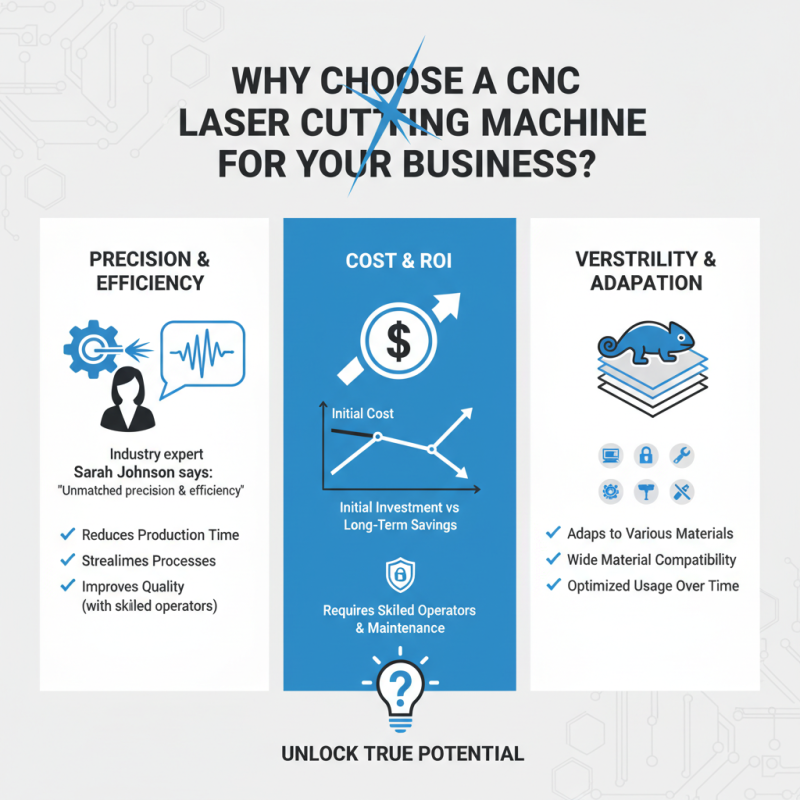
In today's competitive market, businesses seek innovative technologies to enhance their operations. The Cnc Laser Cutting Machine has emerged as a game-changer. Industry expert Sarah Johnson, a leading figure in manufacturing technology, emphasizes, "Laser cutting machines provide unmatched precision and efficiency, allowing businesses to thrive."
Investing in a Cnc Laser Cutting Machine can significantly reduce production time. It streamlines processes that were once tedious. Many companies find that quality improves alongside speed, but this isn't a guaranteed outcome. It requires skilled operators and proper maintenance. Without these, the benefits may fall short.
Moreover, while the initial cost can be daunting, the long-term savings often overshadow the investment. This technology can adapt to various materials, showcasing its versatility. However, it may take time to optimize usage fully. Reflecting on these aspects can help businesses recognize the true potential of a Cnc Laser Cutting Machine in their operations.
Benefits of CNC Laser Cutting Machines for Modern Businesses
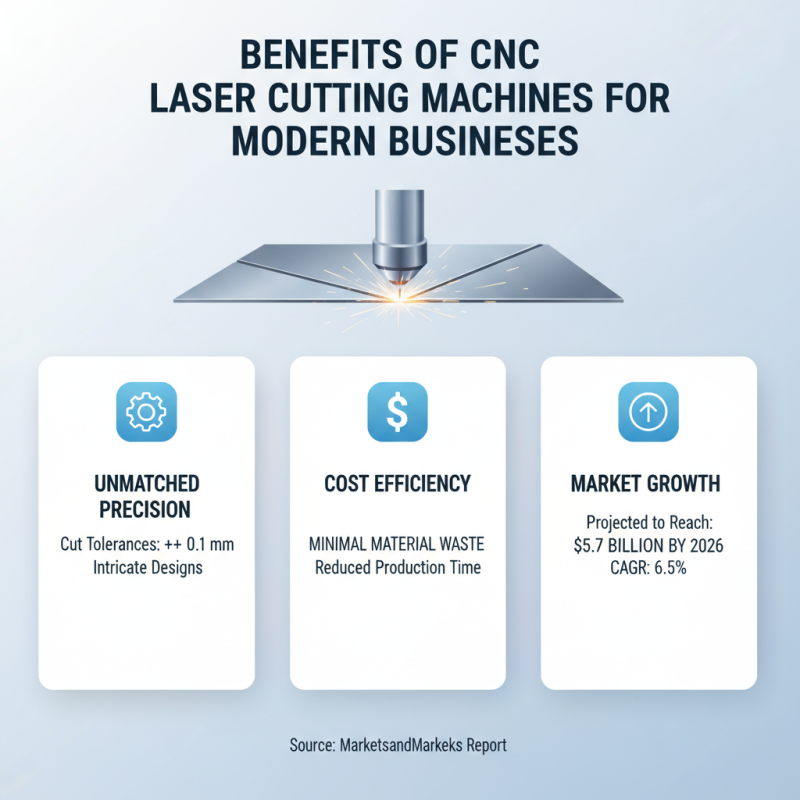
CNC laser cutting machines are transforming modern manufacturing. Their precision is unmatched, offering cut tolerances of +/- 0.1 mm. This allows businesses to create intricate designs with minimal waste. According to a report by MarketsandMarkets, the CNC laser cutting market is projected to reach $5.7 billion by 2026, growing annually by 6.5%. Such growth reflects the need for efficiency and high-quality output.
These machines also enhance operational efficiency. They can process materials like metals, plastics, and wood quickly, reducing production time significantly. Studies show that manufacturers using CNC technology can improve productivity by up to 25%. However, initial setup costs can be high, which may deter small businesses. Investing in CNC laser cutting, despite the expense, could lead to long-term savings and profitability.
Adopting CNC laser cutting can improve design capabilities. Businesses can produce complex parts that traditional methods struggle to achieve. Yet, mastering this technology requires skilled operators. Companies might face challenges in training staff to utilize these systems effectively. Transitioning to this technology also requires evaluation of existing workflows. Embracing CNC laser cutting presents clear benefits but demands careful consideration and adaptation.
Key Features of CNC Laser Cutting Technology
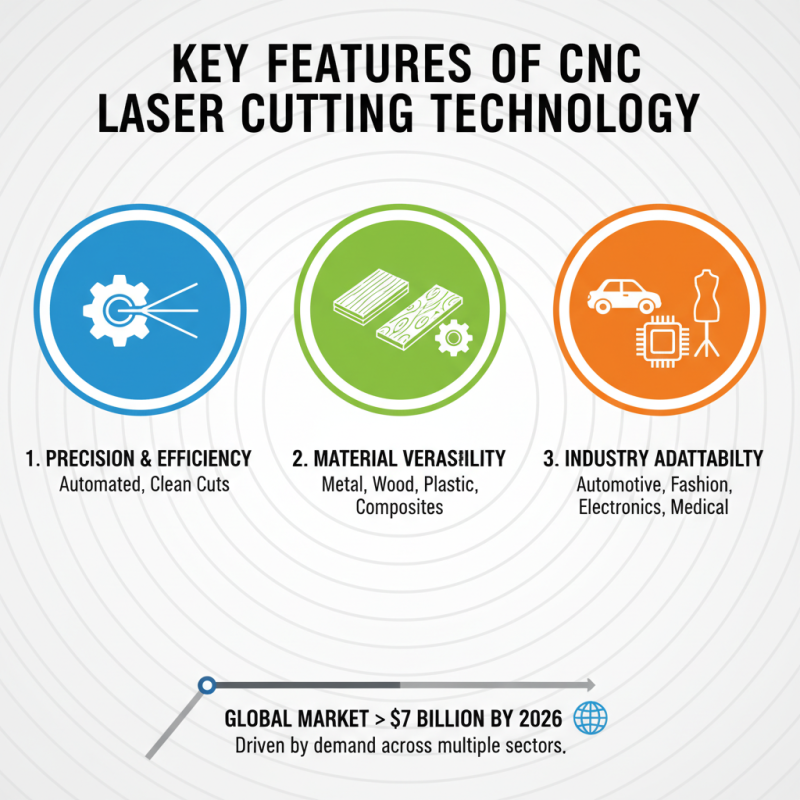
CNC laser cutting machines offer precision and efficiency that traditional methods often cannot match. One key feature is their ability to cut various materials, such as metal, wood, and plastic. This versatility makes them indispensable in industries ranging from automotive to fashion. According to recent industry reports, the global CNC laser cutting market is expected to reach over $7 billion by 2026, driven by demand across multiple sectors.
The technology relies on high-powered lasers that produce clean, accurate cuts. The cutting process minimizes material waste, enhancing overall productivity. A study revealed that facilities using CNC laser cutters saw a 30% increase in production efficiency. However, adapting to this technology requires skilled operators and training programs, which can be a hurdle for small businesses.
Moreover, CNC laser machines are known for their reduced operational costs over time. They consume less energy compared to older cutting methods. However, these initial investments can be significant. Companies must weigh the long-term benefits against upfront costs. Ultimately, the choice to adopt CNC laser cutting technology depends on careful analysis of these factors.
Applications of CNC Laser Cutting in Various Industries
CNC laser cutting machines are revolutionizing industries worldwide. They offer precision and efficiency. According to a report by MarketsandMarkets, the global laser cutting machine market is expected to grow to USD 4.98 billion by 2026. This highlights the increasing reliance on laser cutting technology across various sectors.
In the automotive industry, CNC laser cutting is used for fabricating components like chassis and body panels. The process enhances the accuracy of cuts, minimizing waste. A study revealed that companies using laser cutting technology can achieve a reduction in production costs by up to 30%. In the aerospace sector, manufacturers deploy laser cutting for lightweight materials, improving fuel efficiency. The technology allows intricate designs while adhering to strict safety standards.
The effectiveness of CNC laser cutting is also seen in the electronics market. It enables precise cuts for circuit boards and housings, essential for high-performance devices. However, the transition to laser technology presents challenges. Businesses must invest in training and maintenance. Moreover, managing energy consumption can be complex. Despite these hurdles, many industries are acknowledging the immense benefits of CNC laser cutting. The demand for customization and speed drives the shift toward this innovative technology.
Cost-Effectiveness of CNC Laser Cutting Solutions
CNC laser cutting machines have transformed the manufacturing landscape. They offer significant cost-effectiveness for businesses. These machines use precise laser technology to cut materials with minimal waste. This sharp precision means less material is spent on errors, ultimately saving money.
Labor costs are another key factor. Traditional cutting methods often require a larger workforce. CNC machines, however, automate the process. This automation reduces the need for multiple employees. Businesses can reallocate those resources to other areas needing attention.
While the initial investment can be high, the long-term savings are evident. Maintenance and operational costs are generally lower. Companies must evaluate their specific needs. Investing in a CNC laser cutter may not suit everyone. A careful analysis of production requirements is essential to make informed decisions.
Comparison of CNC Laser Cutting with Traditional Cutting Methods
CNC laser cutting offers distinct advantages over traditional methods. With traditional cutting techniques, such as sawing or shearing, material waste can be significant. Laser cutting minimizes waste by using a focused beam to cut through materials precisely. This efficiency translates into cost savings for businesses.
Another key difference lies in the versatility of materials. CNC laser cutting can handle various materials, including metals, plastics, and woods. Traditional methods often struggle with tougher materials or require multiple tools for different materials. While CNC laser machines can be an investment, their efficiency can lead to better long-term returns.
However, there are challenges to consider. Training operators can take time and resources. Additionally, maintenance of laser cutting machines can be more complex than conventional tools. Businesses need to weigh these factors before making a switch. The shift to CNC laser cutting is not always straightforward but can provide significant benefits when implemented correctly.
Why Choose a CNC Laser Cutting Machine for Your Business? - Comparison of CNC Laser Cutting with Traditional Cutting Methods
| Feature |
CNC Laser Cutting |
Traditional Cutting Methods |
| Precision |
High precision with minimal kerf width |
Moderate precision; kerf width can vary |
| Material Versatility |
Can cut a wide range of materials, including metals, plastics, and wood |
Limited to specific materials and thickness |
| Speed |
Fast cutting speeds, reducing production time |
Slower cutting speeds, longer production times |
| Setup Time |
Quick setup; requires minimal tooling |
Longer setup time; often requires significant tooling |
| Cost Efficiency |
Higher initial investment but lower operational costs |
Lower initial costs but higher material waste and labor costs |
| Safety |
Safer operation with protective enclosures |
Higher risk of accidents and injuries |

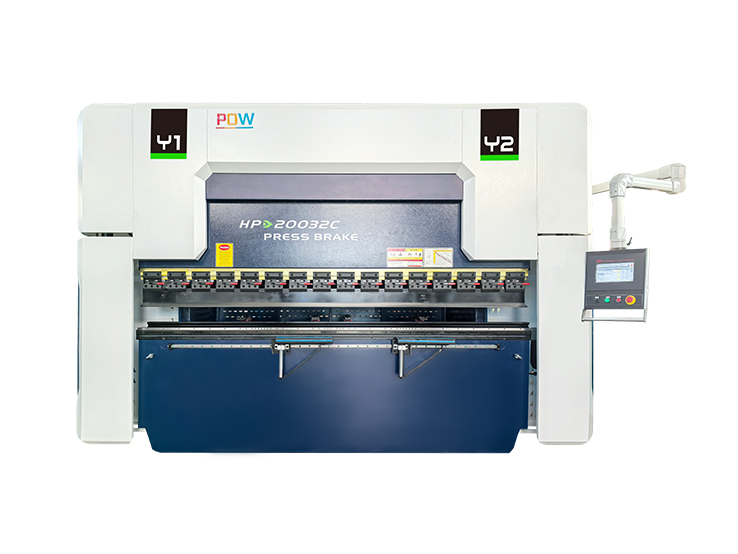 Press Brake
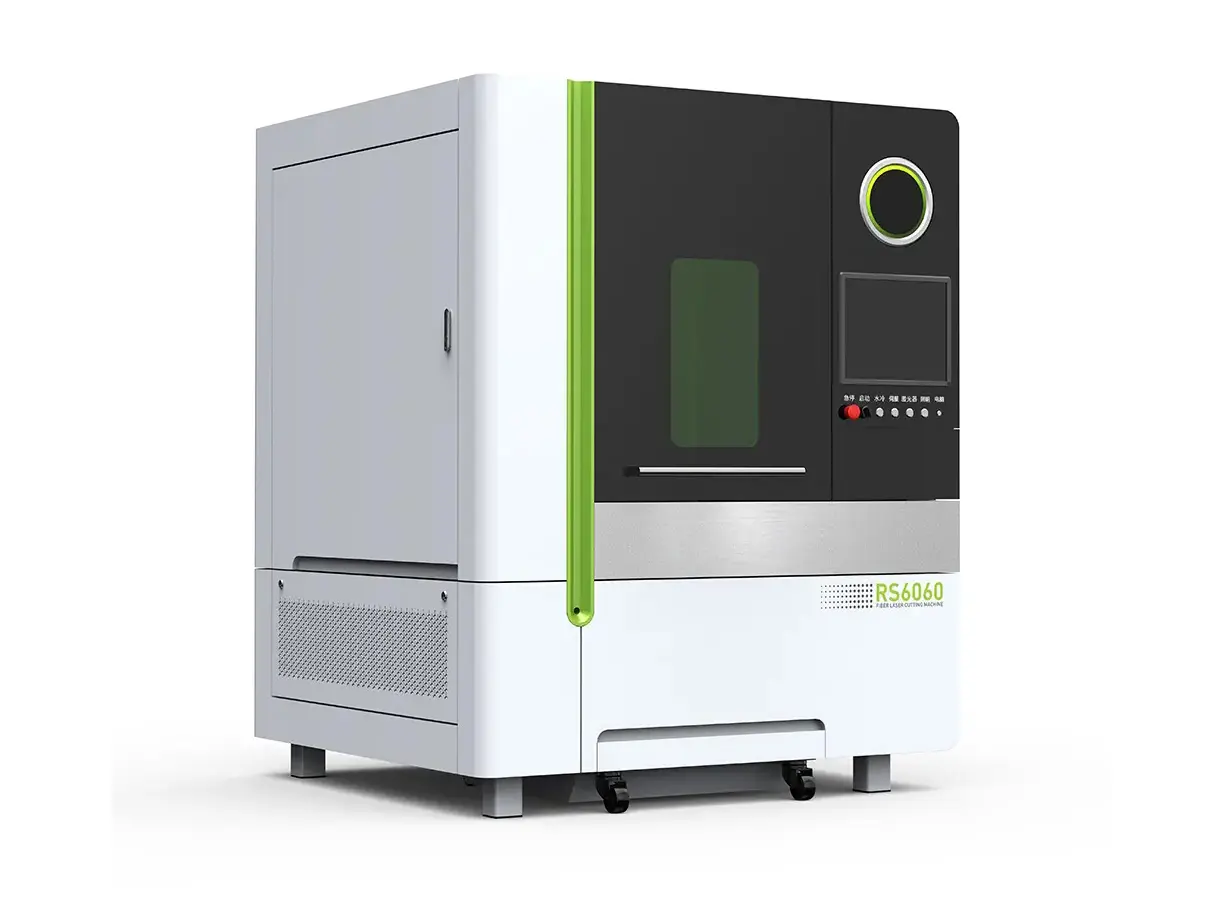 CNC Laser
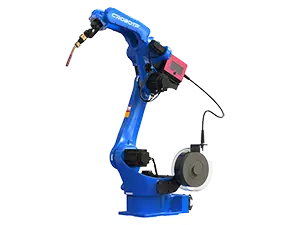 Industry Robot
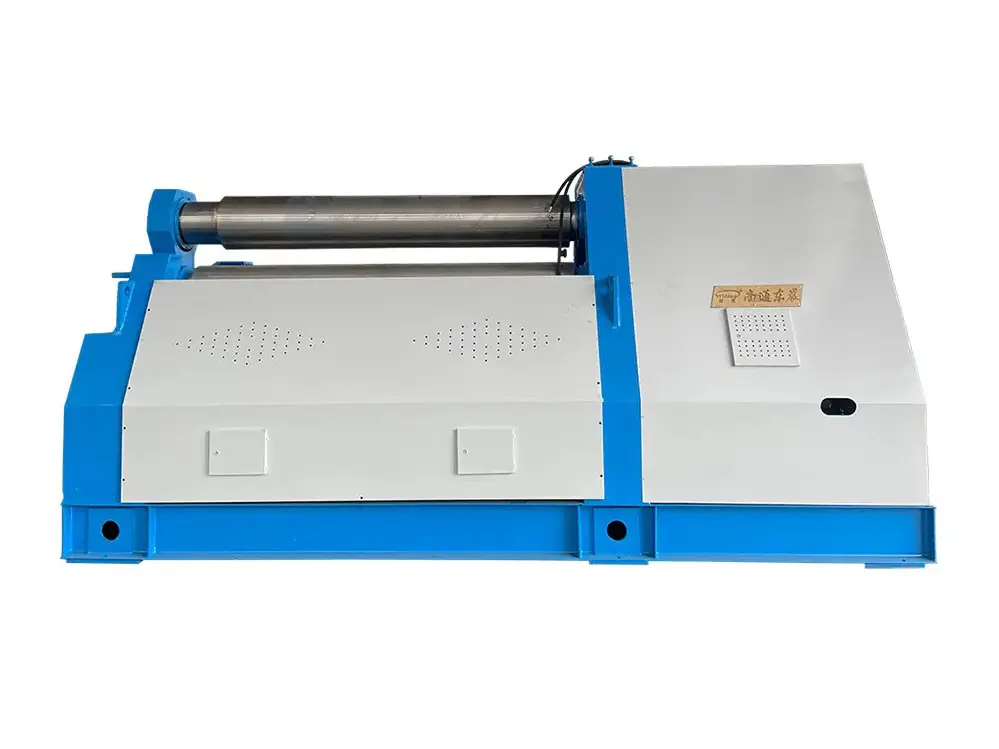 Plate Rolling Machine
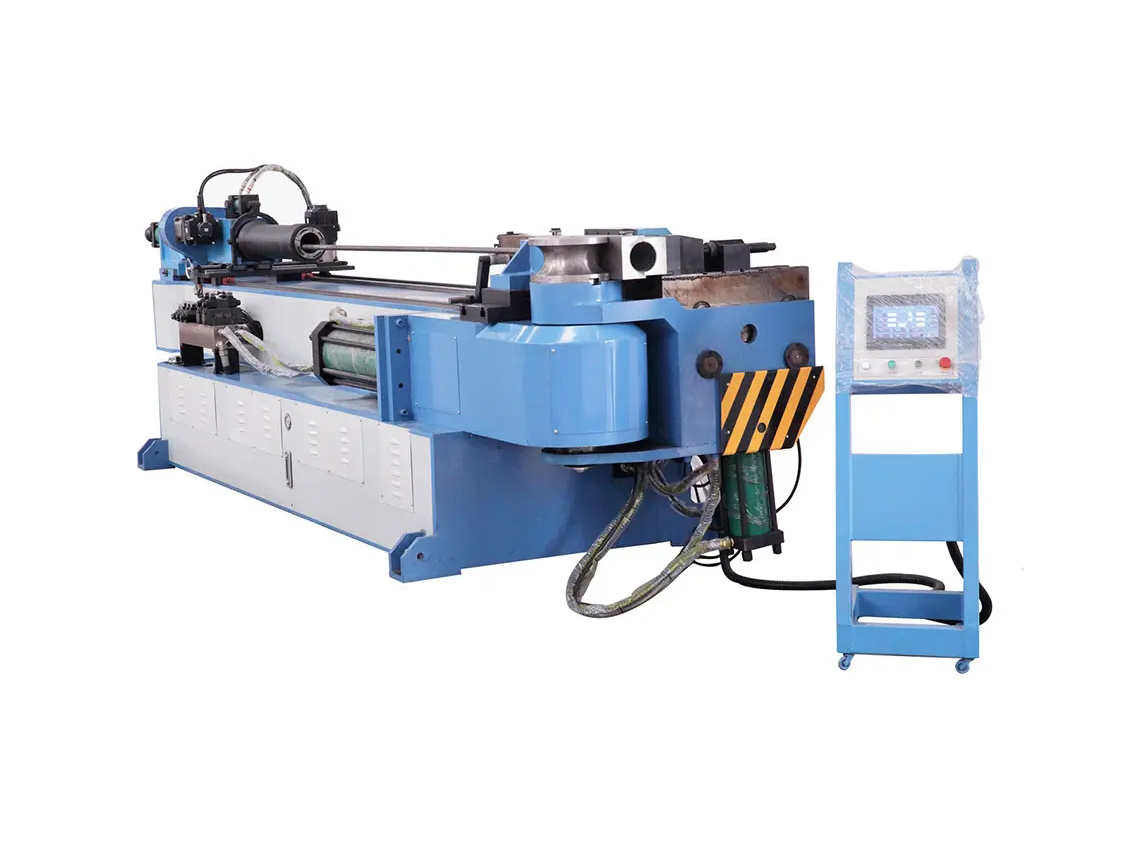 Tube Bending Machine
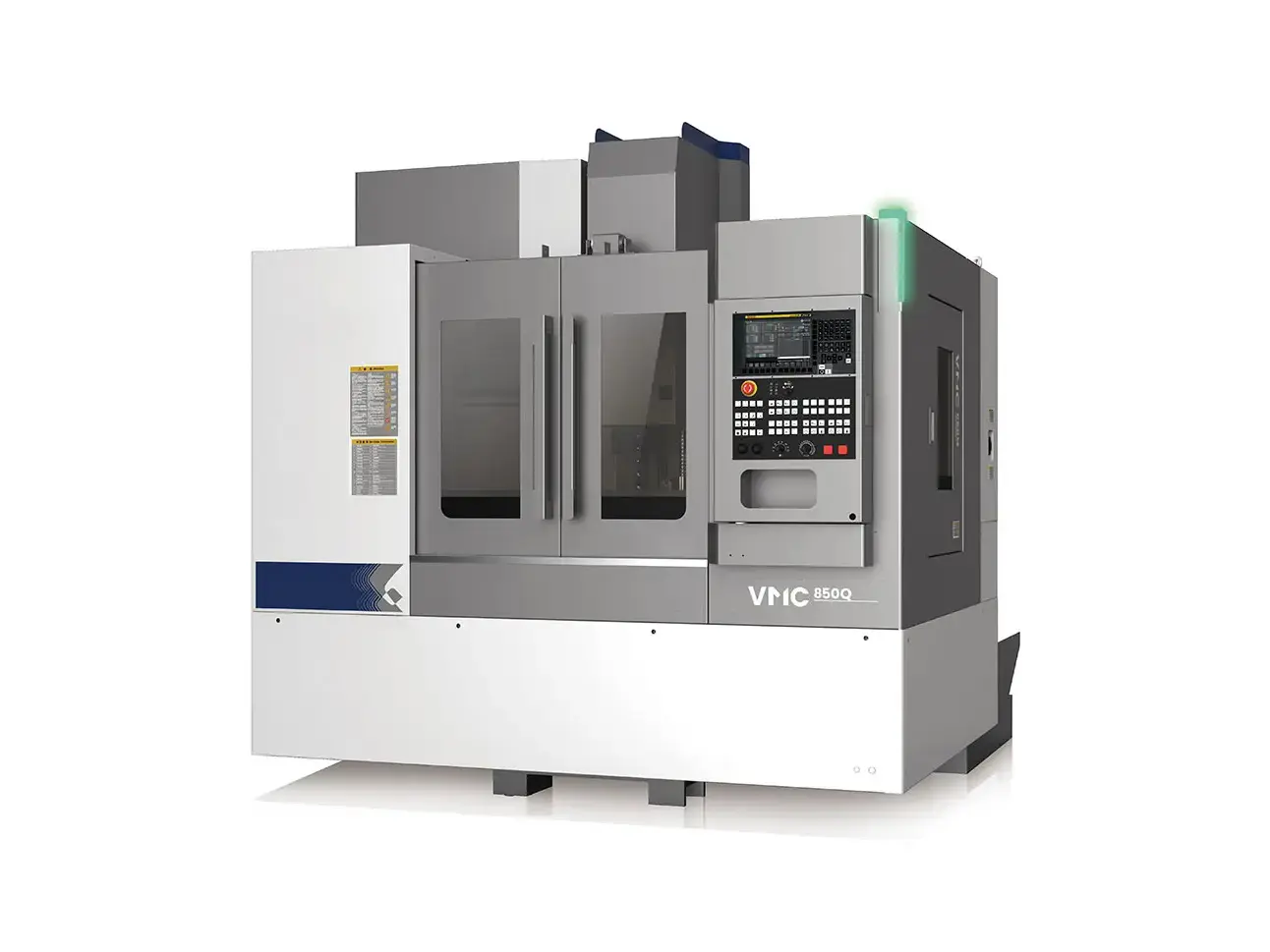 Lathe and Machining Center
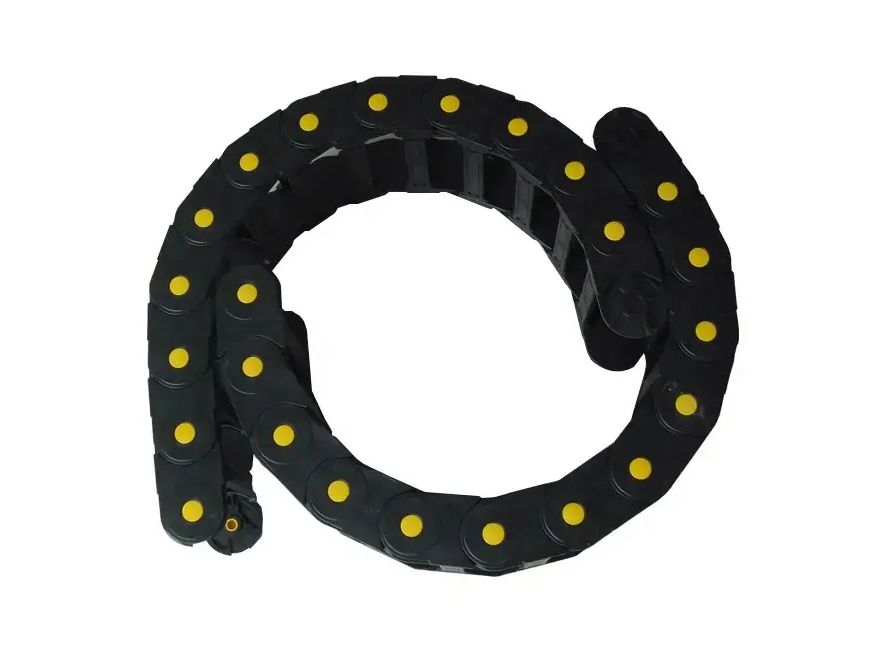 Machine Protection Products